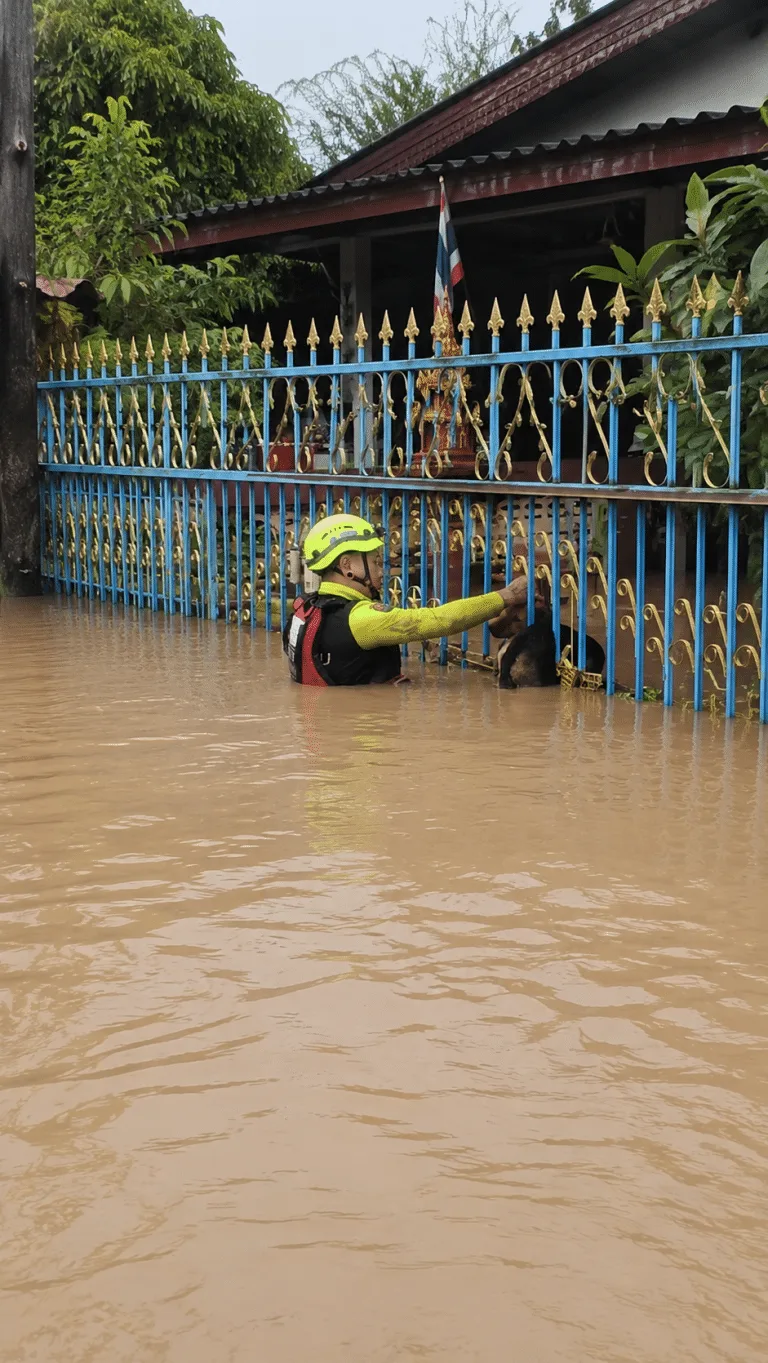
Brown floodwater had swallowed much of the street, rising high enough to reach the chests of adults struggling through the current. Fences were partly submerged, and nearby houses stood surrounded by water. With the ground hidden beneath the muddy surface, even taking a single step forward could be dangerous.
Then a rescue team noticed something behind a metal barrier. Just above the water was the head of a dog. Almost his entire body was submerged, and the narrow spaces between the metal bars left him no way to escape.
The dog appeared exhausted. He had to keep his nose and mouth above the surface while the current continued pushing against him. One rescuer decided to approach, even though reaching the animal meant entering the deep, moving water himself.
What followed was a careful rescue in which there was little room for mistakes. Before attempting to free the dog, the man first had to reach him, earn enough trust to handle him safely, and find a way to lift him through the barrier.
VIDEO: A Rescuer Enters Chest-Deep Floodwater to Save a Trapped Dog
A Metal Fence Had Turned Into a Dangerous Trap
The dog was trapped inside an enclosed area bordered by metal fencing. Under normal circumstances, the barrier might have simply marked the boundary of a yard or walkway. But as the floodwater rose, it became an obstacle he could not get past.
Water flowed through the bars, but the openings were too narrow for his body. The current made the situation even more difficult, pushing against him while debris and hidden obstacles added to the danger.
Almost everything below his head was underwater. If he lowered himself, his face would disappear beneath the surface. Trying to force his way through the fence could leave him injured or stuck.
The footage does not reveal how long he had been in that position. It also provides no information about where he came from or how he became trapped. What is clear is that he had very little room to move and no obvious way to reach safety on his own.
The Rescuer Moved Slowly Through the Current
One member of the rescue team entered the water wearing a helmet and life vest. Even with protective equipment, the conditions were dangerous. The muddy water concealed the ground beneath it, while the current pressed against his body as he moved toward the fence.
He could not simply walk straight to the dog without considering every step. An unseen hole, uneven surface, or submerged object could affect his balance, especially once he needed to carry the animal back.
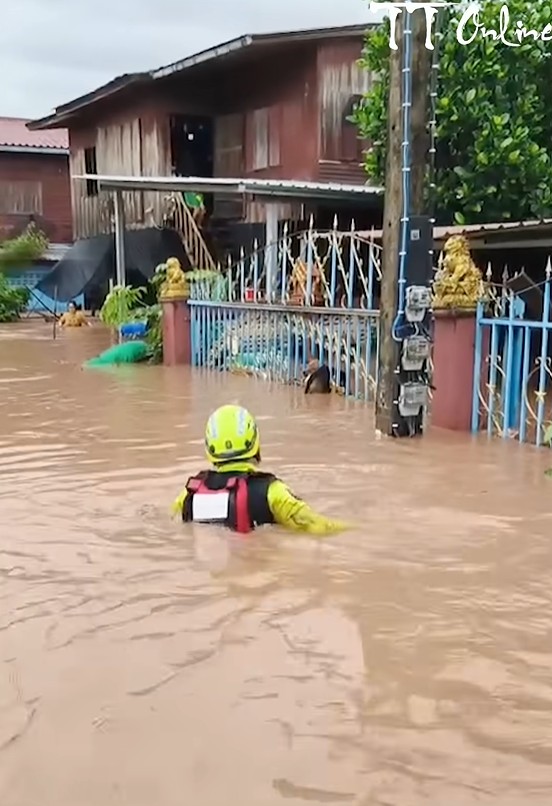
As the rescuer approached, the dog watched him anxiously. His head moved, and his body appeared to tremble beneath the surface. With the fence preventing him from escaping, he had no way to create distance from the unfamiliar person coming toward him.
The man slowed down when he reached the dog. Rather than immediately grabbing him, he first extended a hand and gently placed it on the animal’s head.
The contact appeared to help the dog settle. Although he remained frightened, his movements became less frantic. The rescuer continued touching him gently and positioning himself carefully before attempting the lift.
That brief pause was important. In water this deep, a sudden struggle could put both of them at risk.
Getting Him Through the Narrow Opening
Reaching the dog was only half the challenge. The rescuer still had to lift him through the metal bars without letting his body become caught against the edges.
He carefully positioned his arms around the animal and began raising him. The dog’s body looked heavy with exhaustion, and he did not make any sudden attempt to escape.
The man adjusted his grip, lifted the dog’s chest, and gradually guided the rest of his body through the opening. Each movement had to be controlled. If the dog slipped or twisted at the wrong moment, he could fall back into the floodwater or become wedged against the fence.
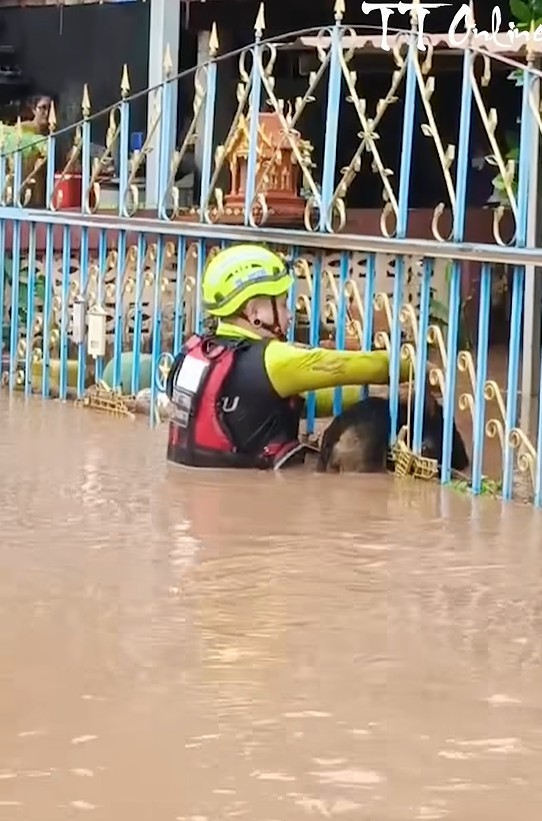
Once the dog was finally free, the rescuer pulled him firmly against his chest, resting him against the life vest.
Carried Away From the Water That Nearly Covered Him
The return journey was still difficult. The rescuer had to wade through the same chest-deep water while supporting the dog’s weight. He continued testing his footing and maintaining his balance as the current pushed against him.
The dog stayed still in his arms. For the first time in the footage, he no longer had to struggle to keep his face above the water or remain trapped behind the metal barrier.
The image of the man carrying the soaked dog against his chest is perhaps the most memorable part of the rescue. Behind them was the place where the animal had been stuck. Ahead was the route back toward safer ground.
The video does not show what happened after they left the flooded area. There is no confirmed information about a veterinary examination, where the dog was taken, or whether he was reunited with an owner. His condition afterward is also unknown.
Still, the footage captures a meaningful change. The dog was no longer confined behind the fence, and the current was no longer pressing directly against his body.
During severe flooding, animals can easily become overlooked. Some are trapped in enclosed yards, damaged buildings, or other places where rising water leaves them with no safe route out. They cannot explain their situation, and sometimes only a small movement or a glimpse of a head above the water reveals that they are there.
This dog was noticed because someone looked closely enough to see him. One rescuer then entered the dangerous water, approached him patiently, and carried him out.
Just minutes earlier, almost his entire body had disappeared beneath the muddy floodwater. By the end of the footage, he was safely out of the metal enclosure and resting in someone’s arms.