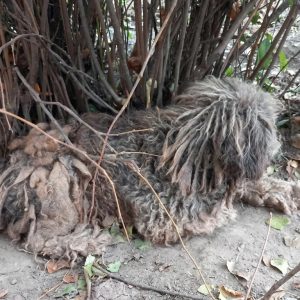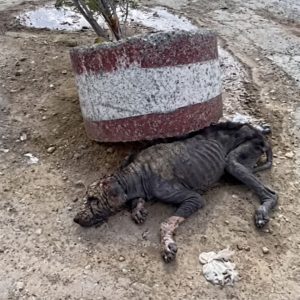
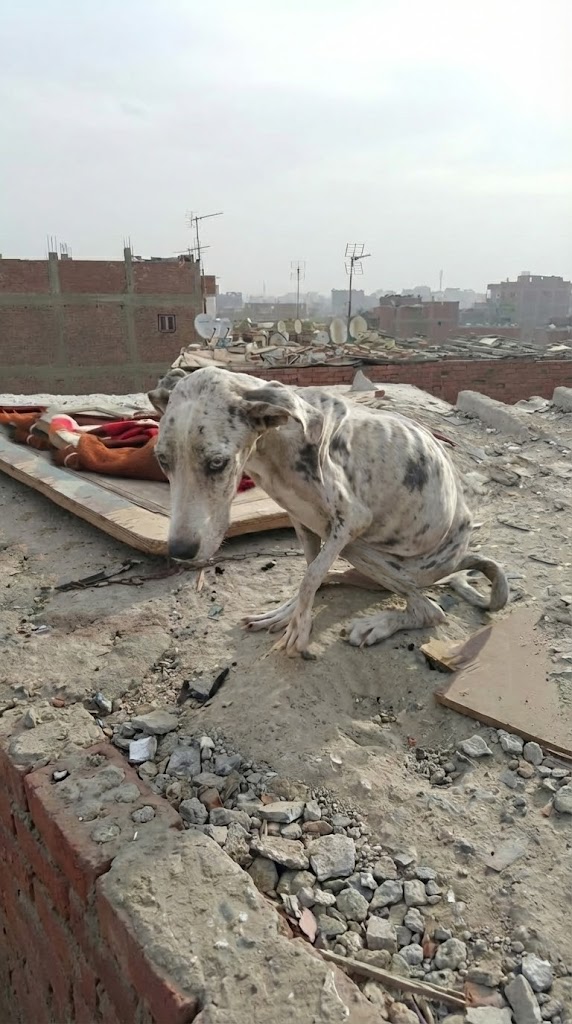
Under the relentless glare of a rural sun, a lonely figure limped along a dusty road.
He wasn’t a dog in the way we usually imagine one—full of energy and life. At that moment, he was a shadow. A frail, trembling collection of bones surviving on nothing but the heat of the afternoon and the memory of a full stomach.
Hunger had moved past being a sensation. For this dog, who would later be named Angelo, hunger had become his entire identity.
VIDEO: From Desperation to Hope: How One Dog’s Survival Sparked a Life-Changing Act of Compassion
The Slow Erosion of a Spirit
In the harsh rural landscape, the struggle for stray animals is rarely sudden. It is a slow, agonizing erosion.
Angelo hadn’t always been this broken. There was likely a time when he was a clumsy pup racing through the tall grass. But over time, the environment offered no mercy.
- The Physical Toll: His ribs began to protrude sharply, creating a skeletal map of his neglect.
- The Mental Weight: His pace grew slower with each passing sunset as his world shrank to the size of his next step.
- The Silence of the Fields: Nights were the hardest. In the chilling silence, the ache of an empty stomach grew loud enough to drown out hope.
Driven by nothing but primal instinct, he kept moving, though his body was painfully, dangerously empty.
The Breaking Point by the Roadside
In communities overwhelmed by their own hardships, suffering often goes unnoticed. It wears an animal down in total silence until a breaking point is finally reached.
That moment came one afternoon when Angelo’s legs simply gave out.
He collapsed in the dust, overcome by the heat and total physical depletion. To any other passerby, he might have looked like just another tragic part of the landscape—a discarded thing.
But that day, fate wore the face of a woman named Marie-Claire.
A Life-Saving Intervention
Marie-Claire, a volunteer nurse, was driving home when she spotted the motionless form in the dirt. Her professional experience allowed her to recognize the signs of near-fatal distress instantly.
She didn’t keep driving. She didn’t assume someone else would help.
She knelt beside him in the dust, speaking in the low, soothing tones she used for her patients. Though Angelo was barely responsive, a tiny spark of life remained. Marie-Claire made an immediate, firm decision: This dog would not die today.
She arranged for emergency transport and stayed with him, offering a gentle touch that he likely hadn’t felt in years.
The Delicate Path to Resilience
At the clinic, the recovery was a high-stakes marathon. Prolonged starvation affects a dog’s system in complex ways, weakening the heart and the spirit simultaneously.

The medical team had to be incredibly patient, slowly reintroducing nutrition that his fragile body could safely handle. It wasn’t just about food; it was about convincing his system that it was okay to live again.
What surprised everyone was Angelo’s incredible resilience. Despite the trauma, he responded to the care with a quiet, profound gratitude. Slowly, the strength returned to his limbs, and his eyes—once dulled by the shadow of death—began to show a flicker of curiosity.
A Legacy Born from the Dust
Today, Angelo is unrecognizable from the skeleton found by the roadside.
He is strong, vibrant, and full of the life that was almost extinguished. He no longer has to wonder where his next meal is or if the night will be his last.
His journey has become a catalyst for change in his community. What began as the rescue of a single, forgotten dog inspired a movement, encouraging more people to notice the silent struggles of the animals around them.
Angelo’s story is a powerful reminder that even in the most desperate circumstances, a single act of compassion—choosing to stop and notice—can rewrite a tragedy into a triumph.