Sometimes the most distressing and life-threatening traps are not made of iron bars, but of simple things gone terribly wrong.
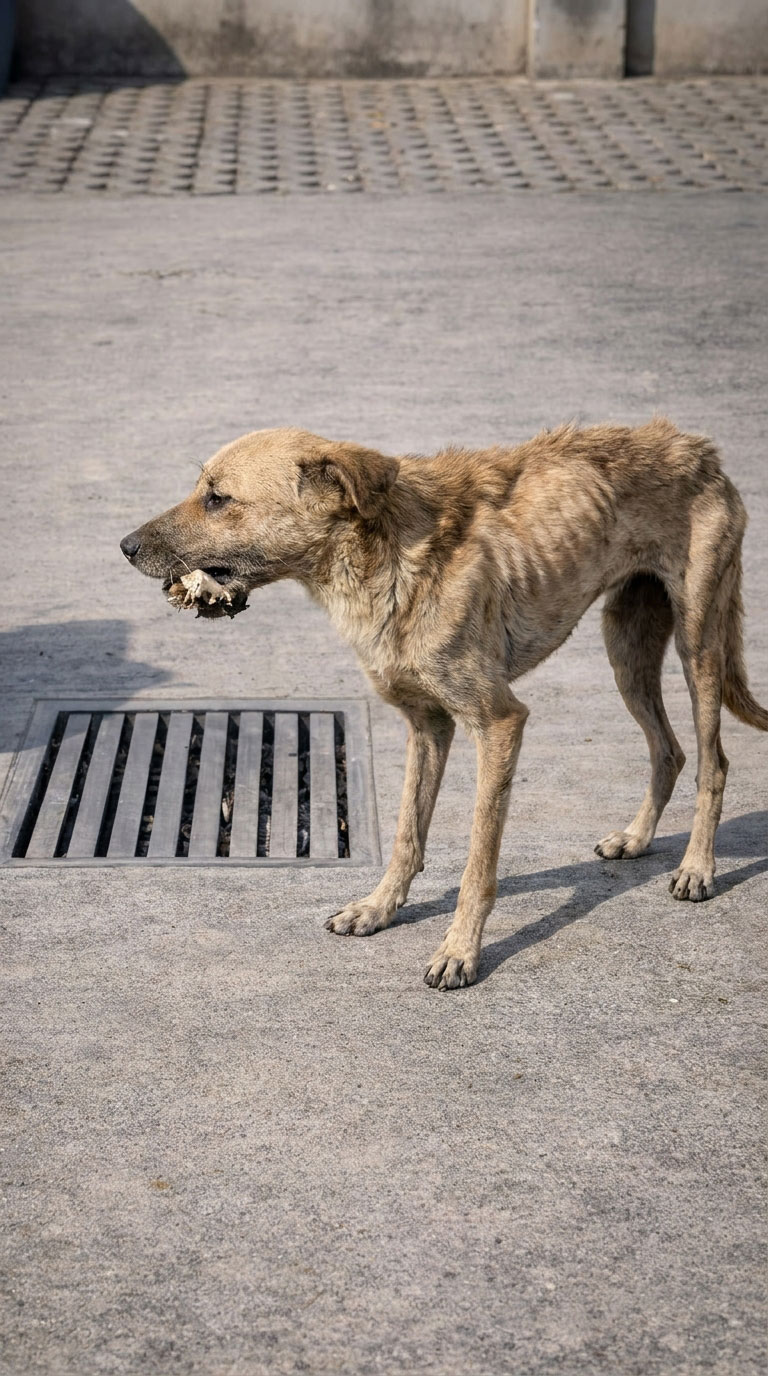
The afternoon air was entirely still when we first spotted him standing completely motionless on the edge of the quiet pavement.
His jaws were forced wide open, locked in a rigid, highly unnatural position by a massive, unyielding piece of bone wedged firmly across the roof of his mouth.
Every shallow, panicked breath he took seemed to push his profound exhaustion further, leaving us with a terrifyingly narrow window to act before his strength gave out.
VIDEO: A Desperate Fight to Breathe — How We Freed Him From an Unforgiving Trap
The rigid obstruction turned every attempted breath into a silent, agonizing plea for help.
He could not close his mouth, he could not swallow, and the sheer, unspoken panic in his wide eyes was absolutely heartbreaking to witness.
He shifted his weight uncomfortably from side to side, completely confused as to why his own body had suddenly turned against him.
We knew instantly that rushing forward aggressively would only escalate his terror and potentially push the obstruction deeper into his tender gums.
Instead, we slowly crouched down a few feet away, ensuring our body language offered nothing but absolute peace and safety.
We spoke to him in the softest, most reassuring tones we could muster to cut through the heavy silence of the street.
“Just stay right there, buddy, we are going to figure this out together,” I whispered softly, slowly inching my empty hand forward.
Surprisingly, his tense, rigid muscles did not command him to retreat into the shadows.
He stood perfectly still, offering a heartbreakingly silent plea for someone to finally end his living nightmare.
Force was absolutely not an option, so we relied on steady hands and unyielding patience.
The massive, calcified obstruction was wedged far too tightly to simply be pulled out by brute physical force.
Any sudden, aggressive movement could easily fracture his delicate jaw or cause severe internal damage that he might not survive.
We needed to meticulously break down the problem itself, rather than forcing a rushed solution onto the deeply frightened animal.
Using a set of specialized, heavy-duty clippers, we began the incredibly delicate task of reducing the thick bone piece by piece.
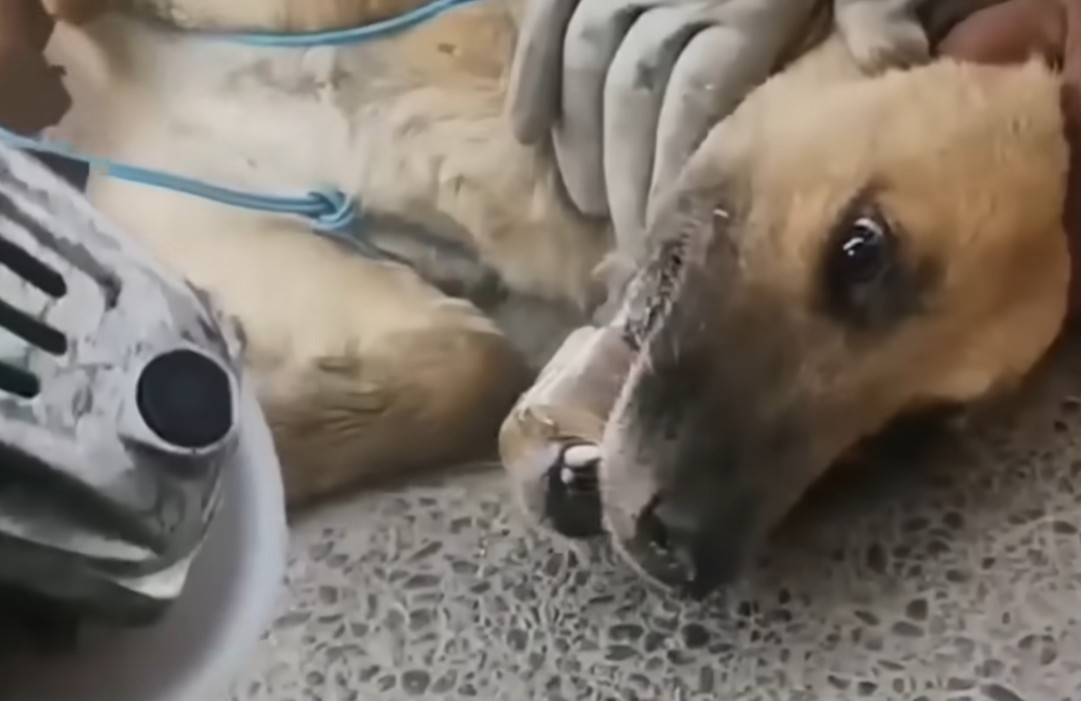
The sharp, metallic clicks echoed loudly in the quiet street as we carefully chipped away at the hard surface just millimeters from his vulnerable tongue.
The exhausted dog flinched momentarily at the strange, heavy vibrations, his eyes darting back and forth in uncertainty.
But our hands remained completely steady and reassuring around his trembling head, holding him in a secure, gentle embrace.
The suffocating tension finally shattered the moment his exhausted jaws closed naturally.
The agonizing minutes stretched on like hours as we slowly and methodically wore down the stubborn trap holding him hostage.
We paused our work frequently, deliberately letting him catch his breath and continuously reassuring him that the terrifying ordeal was almost over.
Finally, with one last, highly calculated squeeze of the heavy tool, the overwhelming pressure completely broke apart in an instant.
The rigid, unforgiving bone loosened its grip and fell harmlessly onto the dusty pavement below our knees.
For the very first time in what must have felt like an eternity, he was able to close his tired mouth completely.
The sheer, immediate relief that washed over his entire, battered body was absolutely undeniable and beautiful to witness.
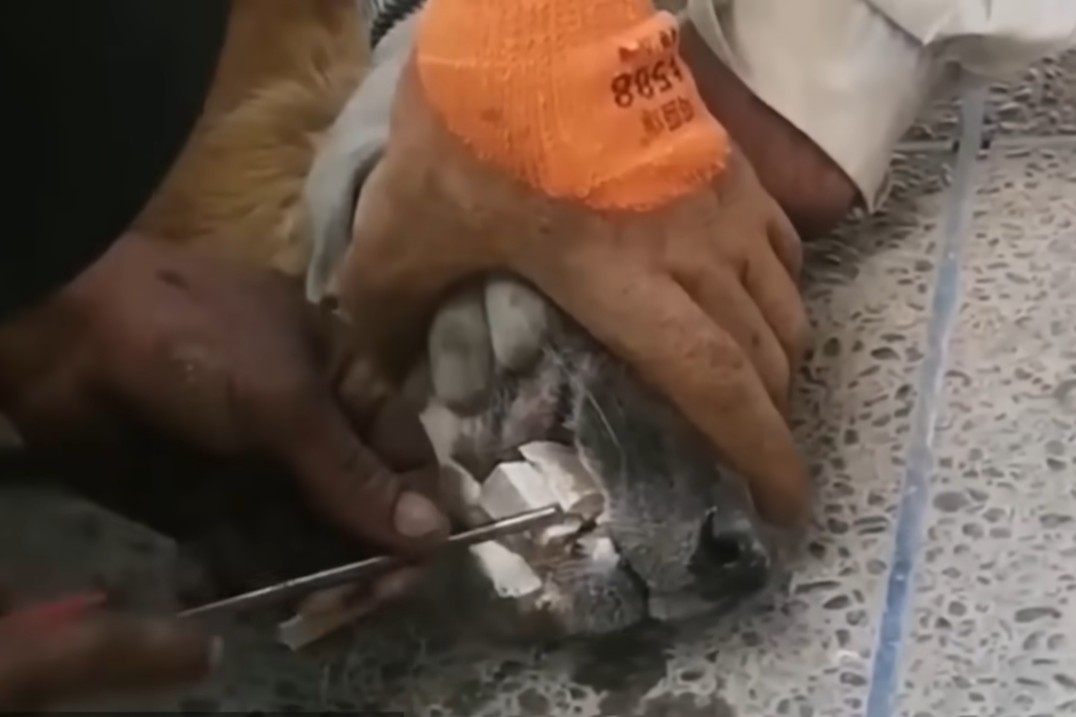
A simple choice to stop and pay attention gave a forgotten soul his life back.
The intense, vibrating tension that had locked his shoulder muscles completely vanished into the thin air almost instantly.
He cautiously moved his jaw from side to side, quietly testing the beautiful, pain-free freedom he had not felt in days.
And then, his dirty tail began to move—a slow, hesitant sway that quickly erupted into an uncontrollable, joyous wag of pure gratitude.
He leaned his heavy, exhausted head directly into our palms, offering soft licks to the very hands that had just dismantled his prison.
This was not a dramatic rescue that required a massive emergency team or a loud fleet of sirens to be successful.
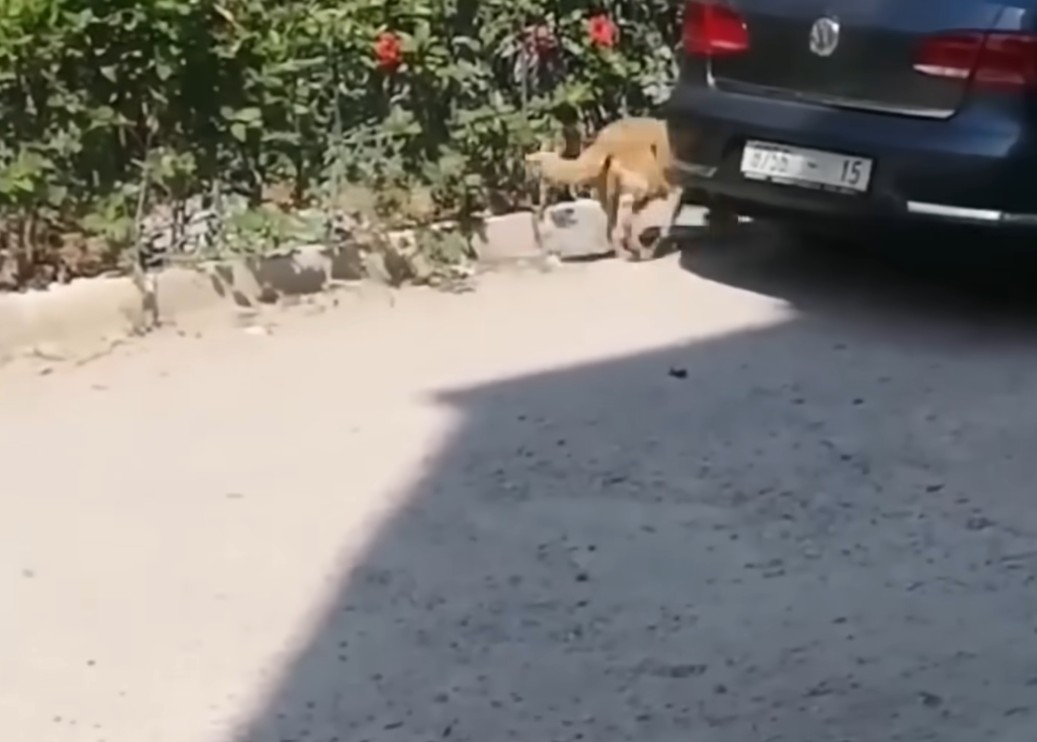
It simply required the basic human willingness to stop, observe, and carefully dismantle a tragedy before it was too late.
“The greatest acts of mercy often require nothing more than a quiet moment of patience and the courage to simply pay attention,” I reflected, watching him finally take a deep, completely effortless breath.