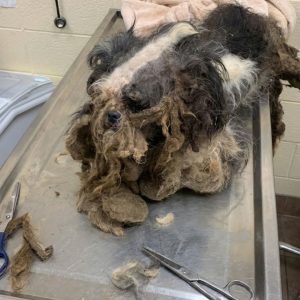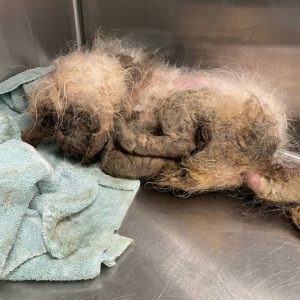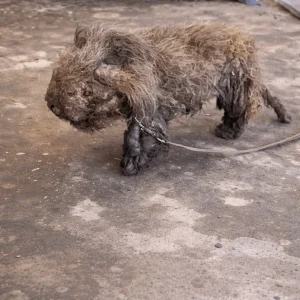
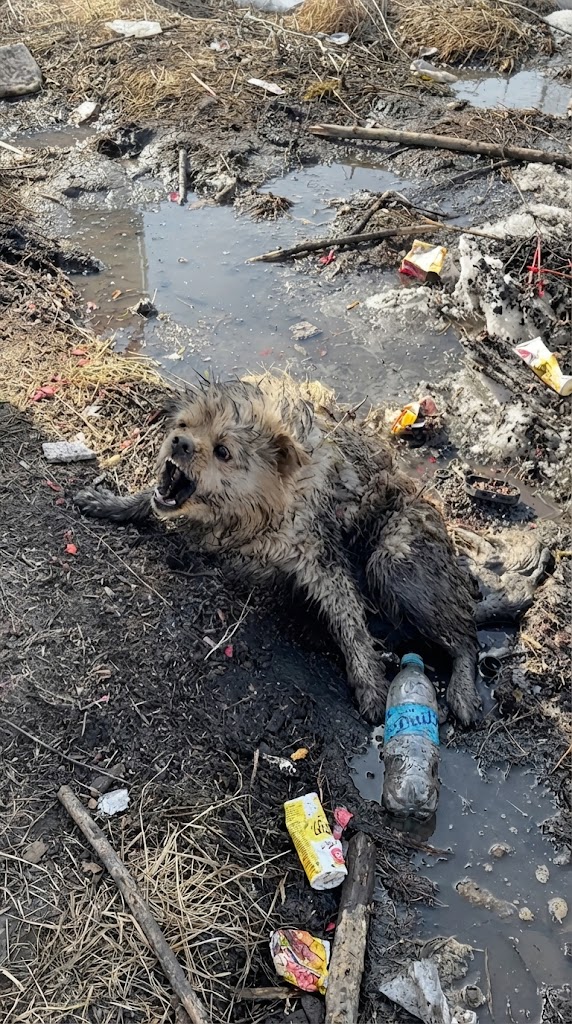
In the industrial outskirts of Harbin, China, surviving as a stray can be especially difficult. Freezing temperatures, harsh living conditions, and the constant struggle to find food leave vulnerable animals with few places to turn. For one paralyzed dog, life had become painfully small. She lay in a filthy puddle, dragging her useless hind legs through the mud because she could no longer walk normally.
When rescuers first spotted her, they knew she needed help. Yet approaching her was far from simple. Each time someone reached toward her, she bared her teeth and pulled away, refusing to let anyone get close. Her injured body made escape difficult, but her fear remained strong enough to turn every attempt at contact into a struggle.
The team from the Harbin City Li Liu Small Animals Rescue Center understood that they could not abandon her simply because she resisted their efforts. They would need patience, careful handling, and time to earn even a little of her trust. The dog was finally secured after hours of trying, but as rescuers brought her to safety, the fear in her eyes made one thing clear: getting her out of the mud was only the beginning.
VIDEO: The Paralyzed Dog Who Slowly Learned to Trust the People Who Rescued Her
https://www.youtube.com/watch?v=AO7amdsNjqg
Why Every Attempt to Help Made Her Fight Back
For the rescuers, the dog’s behavior presented a difficult challenge. She needed immediate attention for her paralysis and the condition of her skin, yet she reacted defensively whenever a person approached. Reaching for her too quickly risked making an already frightening experience even harder.
The rescue team had experience working with animals who were frightened, injured, or abandoned. Liu Li, who began her rescue mission in 2006, had spent years helping animals across Harbin. Through the Harbin City Li Liu Small Animals Rescue Center, she and her team had taken responsibility for thousands of vulnerable animals.
They understood that a frightened dog’s resistance did not necessarily mean she could not be helped. Sometimes, it meant that approaching people felt more threatening to the animal than remaining in a dangerous place.
The team spent hours trying to secure the dog, using patience and gentle voices amid the noise of the industrial surroundings. Eventually, they managed to bring her out of the muddy puddle and into their care.
Her paralysis remained a serious concern. The cause was not confirmed, although the possibility of a previous injury or untreated trauma had to be considered. Whatever had happened, she now needed medical attention and a safe place where her condition could be assessed.
“When fear is the only protection an animal knows, kindness may have to prove itself again and again before it can be accepted.”
At the Rescue Center, Healing Meant More Than Treating Her Injuries
The dog was brought to a rescue center that housed more than 3,000 animals. There, the team could focus on her physical needs while giving her time to adjust to an environment where people were trying to help rather than drive her away.
Her paralysis presented a significant challenge, and the rescuers also had to address problems affecting her skin. Although her physical condition needed careful attention, her fear of human contact was another obstacle that could not be solved through medical treatment alone.
The volunteers continued working with her gently, allowing trust to develop through repeated interactions rather than expecting an immediate change.
During the first week, she refused to make eye contact. The following week, she began allowing a gentle stroke while eating. It was a small change, but it suggested that she was becoming more comfortable with someone’s presence.
Then, during the third week, something especially encouraging happened.
Her tail moved in a small, uncertain wag.
It was not a dramatic transformation, but it marked a meaningful change in the way she responded to the people around her. The same dog who had once bared her teeth at approaching hands was beginning to show a different reaction.
Her progress reminded the rescuers that emotional recovery rarely follows a fixed schedule. An animal may need considerable time before feeling comfortable with something that other dogs accept without hesitation.
A Small Wag Becomes a Sign of Growing Trust
As time passed, the dog began responding more warmly to human contact. According to the rescue account, she started seeking attention and leaning her head into hands she had previously tried to keep away from her.
Her physical recovery remained a separate challenge. Paralysis can require ongoing care, and the available account does not establish that she regained full mobility. But her changing behavior showed that meaningful progress was possible even while questions about her long-term physical condition remained.
The change also reflected the patience of the people caring for her. They had not walked away when she resisted their first attempts to help. Instead, they continued giving her the attention and space she needed to become more comfortable.
At a rescue center caring for thousands of animals, every recovery requires time and resources. Liu Li and her volunteers must balance the individual needs of animals like this dog with the many others depending on them for food, shelter, and medical care.
“Sometimes, the first sign of a better life is not standing on four legs again, but feeling safe enough to welcome the people standing beside you.”
The frightened dog found in a filthy puddle had faced an uncertain future. Her paralysis still presented serious challenges, but she was no longer left alone in the mud, struggling whenever someone came near.
Now, the hands she once feared had become a source of care and comfort. Her story is a reminder that helping a vulnerable animal does not always begin with a dramatic rescue or end with a complete physical transformation.
Sometimes, progress begins with a gentle touch during a meal, continues through weeks of patient care, and finally appears in the movement of a tail that had once remained still with fear.