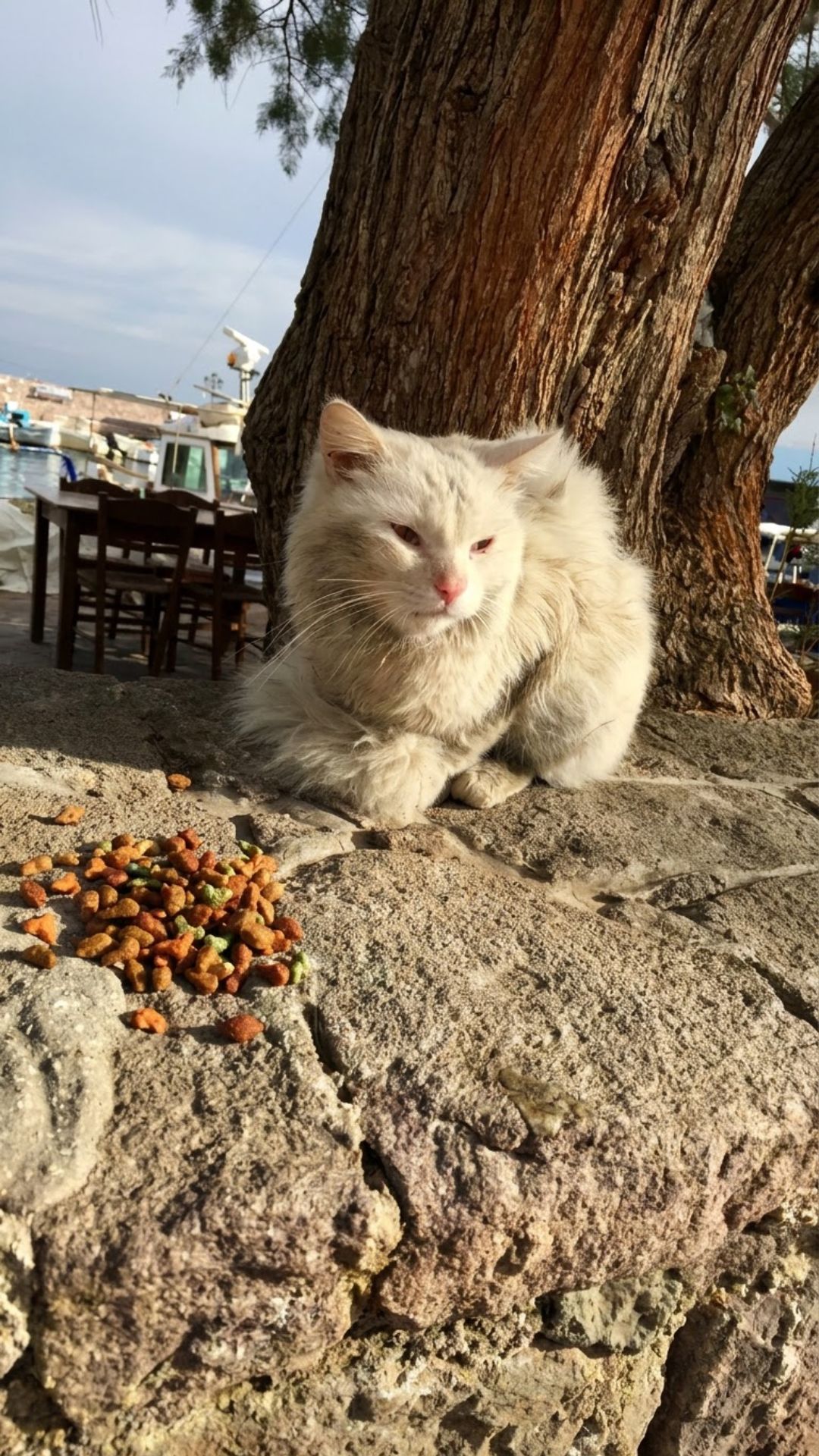
The shorelines of the Greek island of Lesvos were a place of overwhelming chaos and desperate hope in November 2015. Among the countless rubber boats arriving from across the sea, one vessel carried a mother, her five children, and a three-year-old white Turkish Van cat named Kunkush. Fleeing hardship in Mosul, Iraq, the family had trekked across entire countries, carrying the beautiful white cat in a small basket, determined to keep their family intact no matter how difficult the road ahead became.
But the sheer panic of the landing proved to be too much for the feline. Exhausted and terrified by the noise, the unfamiliar crowds, and the jarring movement of the boat, Kunkush leaped from his basket the moment they reached the beach and vanished into the unfamiliar terrain. His family spent hours desperately searching the area, calling his name, but the harsh realities of their situation meant they could not stay. Forced to continue their journey toward a refugee camp, they had to leave their beloved companion behind, stepping into an uncertain future with heavy hearts.
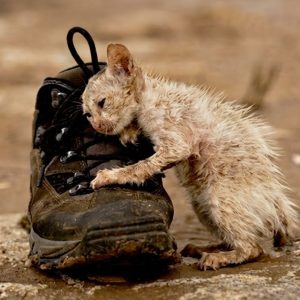
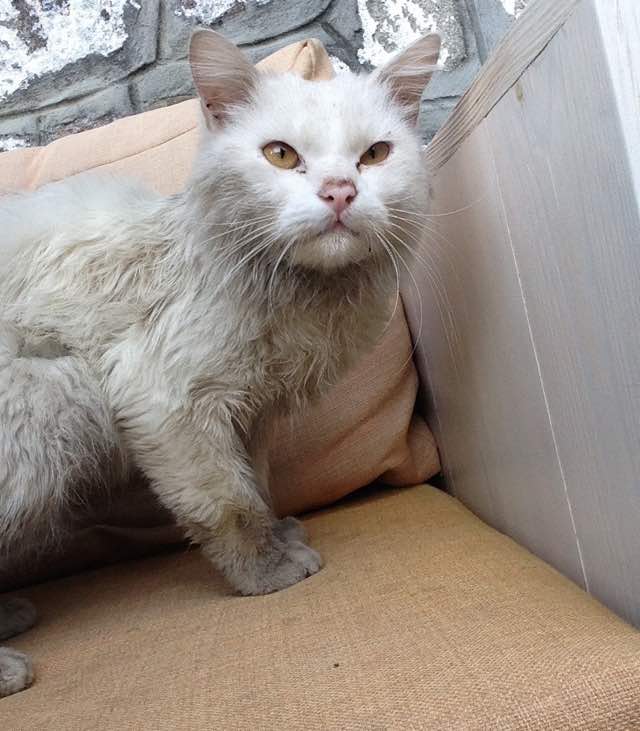
Left alone to fend for himself, the once-pampered indoor cat struggled on the streets of the fishing village. His fluffy white fur became deeply matted with dirt and sand, and he was relentlessly bullied by the local feral cats. Kunkush only managed to survive because kind fishermen and local volunteers began stepping in, physically separating him from the aggressive street cats just so he could eat a meal in peace. It was during these quiet moments of feeding that the volunteers noticed his gentle nature, realizing that this exhausted creature was not a stray, but someone’s deeply missed family member.
VIDEO: Watch Kunkush the lost white cat hear his family’s voices for the first time in months
A Quiet Place to Heal
Unable to locate his owners in the transient crowds of Lesvos, the volunteers named him “Dias”—the modern Greek pronunciation for Zeus—and brought him to a local veterinarian. He was given a thorough health check, vaccinated, and finally allowed to rest in a warm, safe environment.
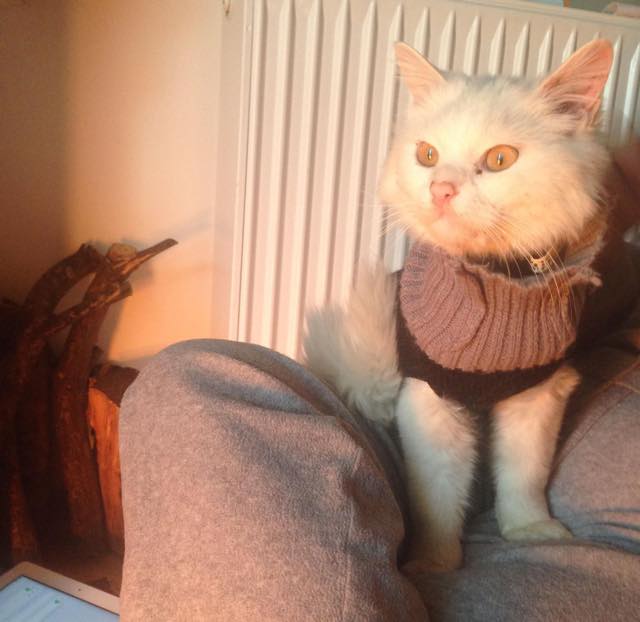
To give him a stable place to recover while the search continued, Kunkush was flown to a foster home in Berlin, Germany.
“When an animal finally stops fighting for survival, the exhaustion of their journey often washes over them all at once, allowing them to finally rest.”
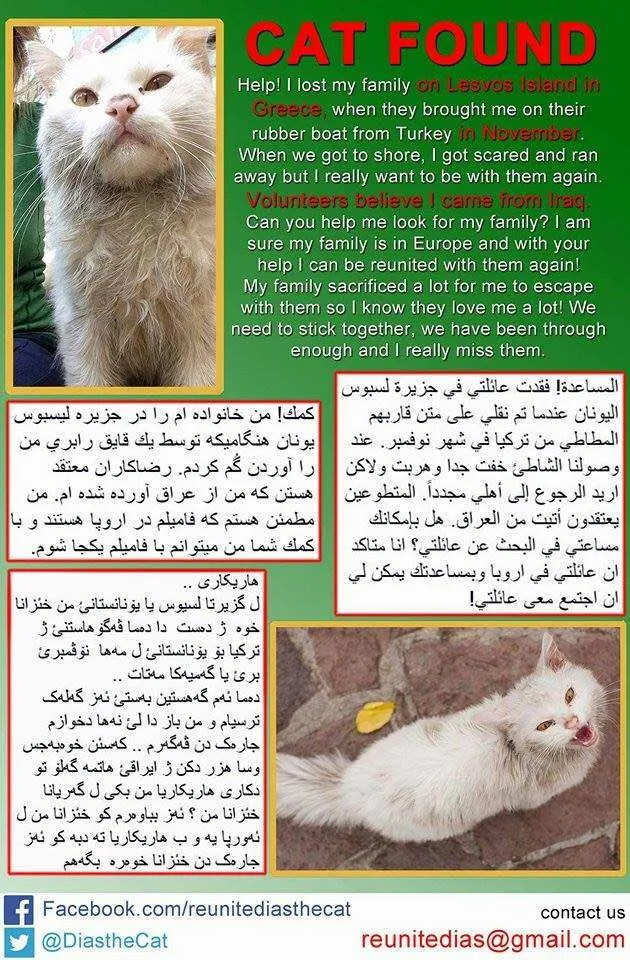
In Germany, his matted fur was brushed out, and his quiet dignity slowly returned. He spent his days sleeping by the fire, regaining his weight, and becoming highly talkative whenever he was awake. Yet, even as he settled into the comforts of a foster home, an international network of volunteers was working tirelessly, launching a massive social media campaign to find the family who had arrived from Iraq months prior.
Voices Through a Screen
As weeks turned into months, the chances of finding the family seemed incredibly slim. They had vanished into the massive movement of people seeking refuge across Europe.
Then, on Valentine’s Day, a breakthrough arrived. A resident in Norway reached out to the volunteer network, explaining that a family who had recently moved in next door matched the description in the campaign. Photographs were quickly exchanged, comparing the pristine white cat in Berlin to older pictures taken during happier times in Iraq. It was an undeniable match.
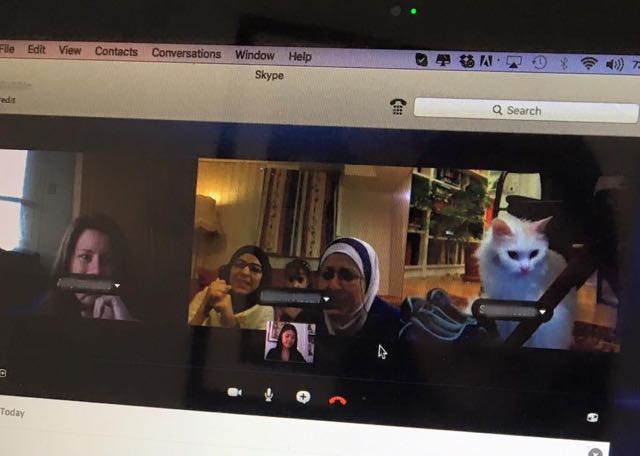
To be absolutely certain, the volunteers arranged a Skype video call between the foster home in Berlin and the family’s new residence in Norway.
The moment Kunkush heard the voices coming from the laptop speakers, his demeanor completely changed. Recognizing the familiar tones of the people who had raised him, the cat immediately perked up and began pacing around the laptop, repeatedly peering behind the monitor in a confused attempt to find where his family was hiding.
Thousands of Miles Later
The physical distance between them was vast, but the emotional bond had not faded in the slightest. Thanks to an online fundraising effort and the dedication of the volunteers who refused to let his story fade, a plane ticket was purchased for the final leg of Kunkush’s extraordinary journey.
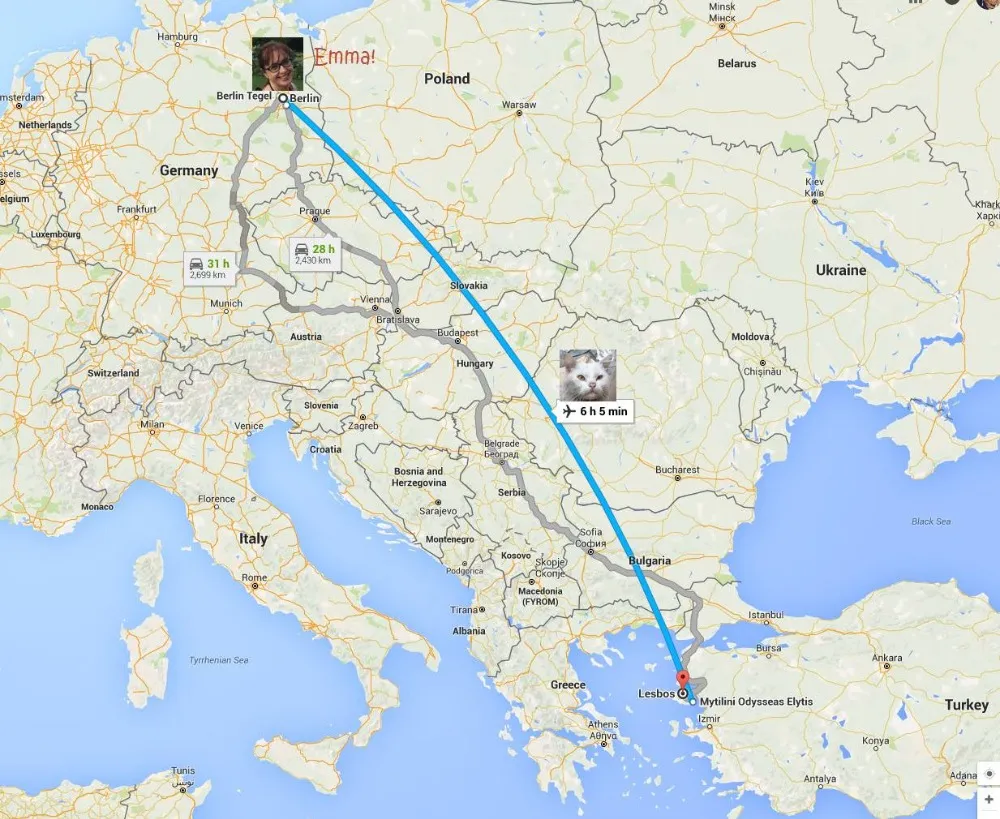
In late February, four months after he bolted on that chaotic Greek beach, Kunkush was flown over 2,000 miles to his family’s new home in Norway.
The environment was completely foreign—a cold, snowy landscape vastly different from the warmth of Iraq or the Mediterranean shores—but as he was finally placed back into the arms of the mother and her children, none of the surroundings mattered. He settled instantly into their embrace, a quiet conclusion to a staggering 4,000-kilometer ordeal.
“Home is rarely a coordinate on a map; for those who have lost everything, home is simply the heartbeat of the ones they love.”