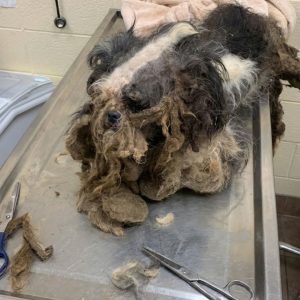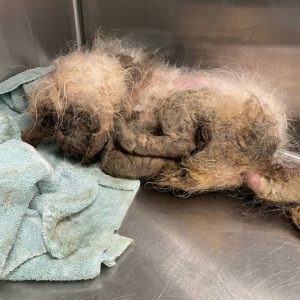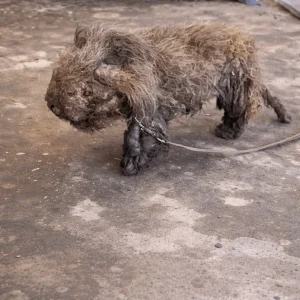
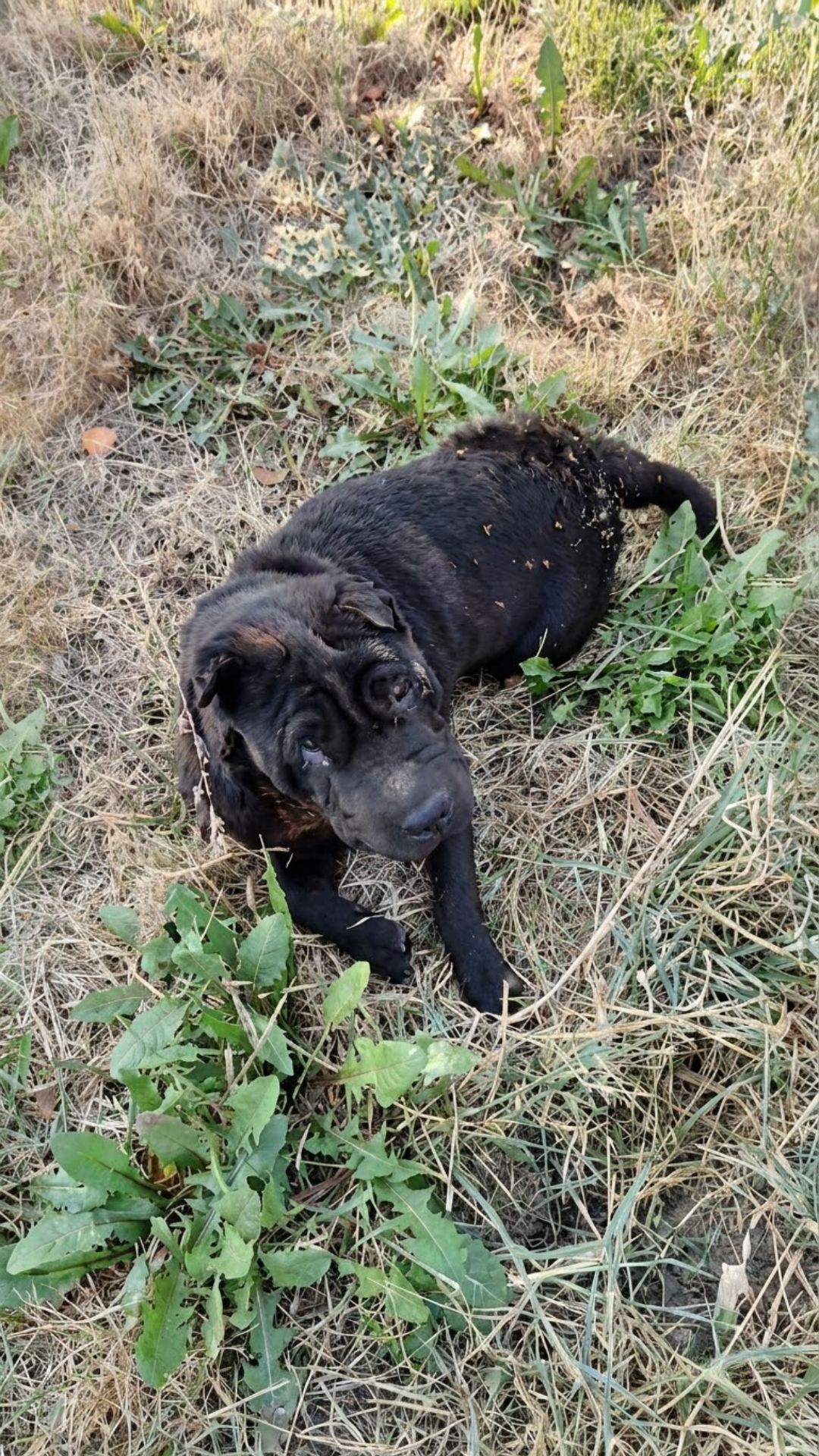
In a barren, noisy stretch of land caught between two busy highways, a dog named Black kept a solitary watch. Left behind in the open field, he remained exactly where he had been abandoned, patiently enduring the elements for days while waiting for an owner who would never return.
His unwavering devotion kept him anchored to that dangerous spot, eventually resulting in a severe collision with a passing vehicle. When rescuers finally found him, Black was lying immobilized in the dirt, his body in immense pain and suffering from a severe physical decline after days of exposure and untreated wounds.
Even in his compromised state, his initial reaction to the approaching strangers was fierce resistance. As a rescuer reached down to gently lift him from the ground, Black stubbornly pushed back, unwilling to abandon his post. It was only when total physical exhaustion overtook his loyalty that he finally yielded, allowing the team to carefully load him into a transport and rush him toward an uncertain night at the veterinary clinic.
VIDEO: Rescue team rushes to help a severely injured dog who refused to leave his spot
Navigating a Critical Midnight Procedure
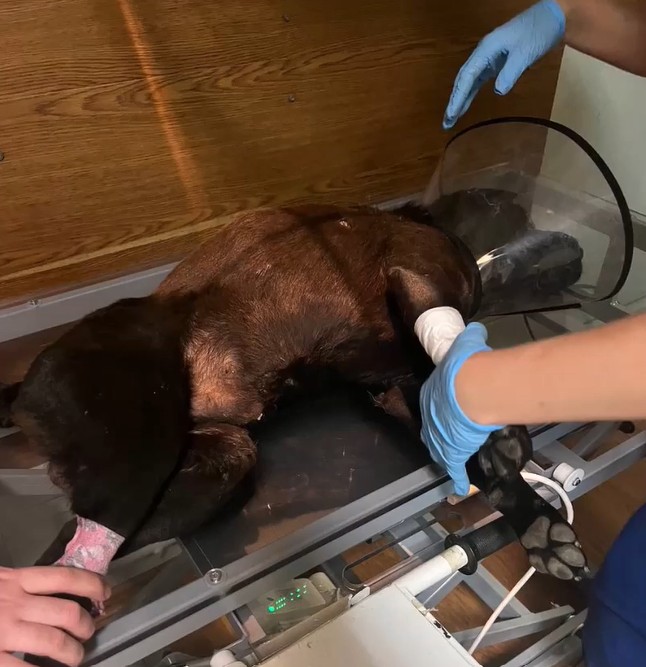
The initial medical evaluation at the hospital revealed a grim picture. Scans showed that Black’s spinal cord was fractured in two separate places, accompanied by extensive bruising, severe swelling along his back, and physical complications from trying to survive on debris and dirt.
Despite the extensive trauma, there was a crucial glimmer of hope: the nerve endings in his legs still retained a degree of sensitivity.
Veterinary surgeons operated late into the night, working meticulously to stabilize his spine and preserve his remaining mobility. By the time the early morning hours arrived, the exhausting procedure was complete, leaving the clinical staff to quietly monitor his first moments waking from anesthesia.
“Sometimes, the will to keep going becomes most apparent in the quiet hours following the deepest trauma.”
The very next day, supported heavily by the nursing staff, Black managed to hold himself upright for fifteen seconds. While conversations about independent movement or physical control were entirely premature, the simple act of bearing weight was a monumental first step.
The Demanding Rhythms of Rehabilitation
After two full weeks of continuous hospital monitoring, Black was stable enough to transition into a specialized foster home.
His new environment was thoughtfully arranged around his healing process. He was settled into a large, custom playpen equipped with an anti-bedsore mattress, ensuring his resting hours would not cause further damage to his fragile frame.
From there, a rigorous daily routine began to take shape.
The weeks that followed were filled with strict medication schedules, daily massages, and the careful removal of surgical stitches. To stimulate his healing nervous system, his caretakers scheduled regular appointments with a rehabilitation specialist, incorporating targeted exercise equipment, professional acupuncture, and controlled sessions on an aquatic treadmill.
“Healing is rarely a single turning point; it is built through the repetitive, often tiring routines of daily care.”
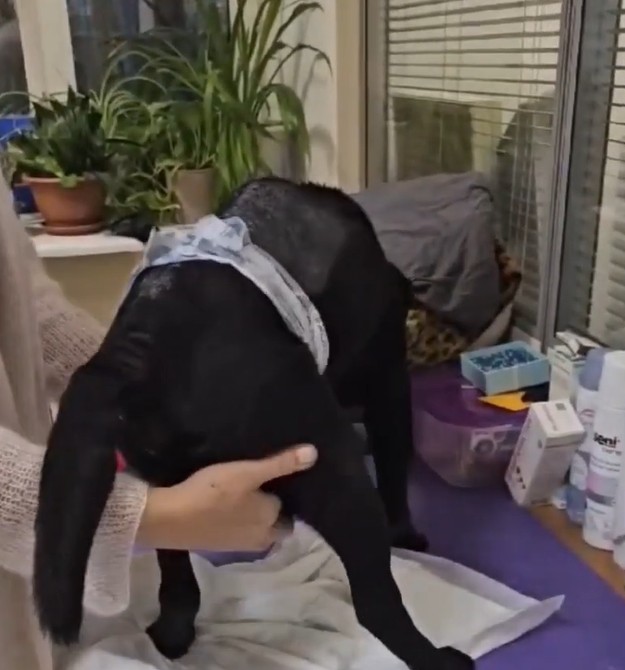
By his twentieth day in foster care, the subtle physical changes became undeniable. The amount of time he could remain stable during warm-up exercises increased daily, and he began pulling himself up from a sitting position with growing frequency.
Stepping Forward Into the Autumn Air
Forty-five days into his grueling rehabilitation regimen, Black reached a milestone that once seemed entirely out of reach: he stood completely on his own without any human support.
The dog who had once been broken and immobilized in the dirt was now actively participating in his own recovery, confidently navigating water tracks and outdoor paths with his foster mother by his side.

Three months after his rescue, Black is walking on his own legs once again.
While his gait may still carry the slight, uneven marks of his past injuries, his movement represents an incredible triumph over his circumstances. Surrounded by structured care and genuine affection, the deep loyalty that nearly cost him his life has finally been redirected toward people who will never leave him behind.