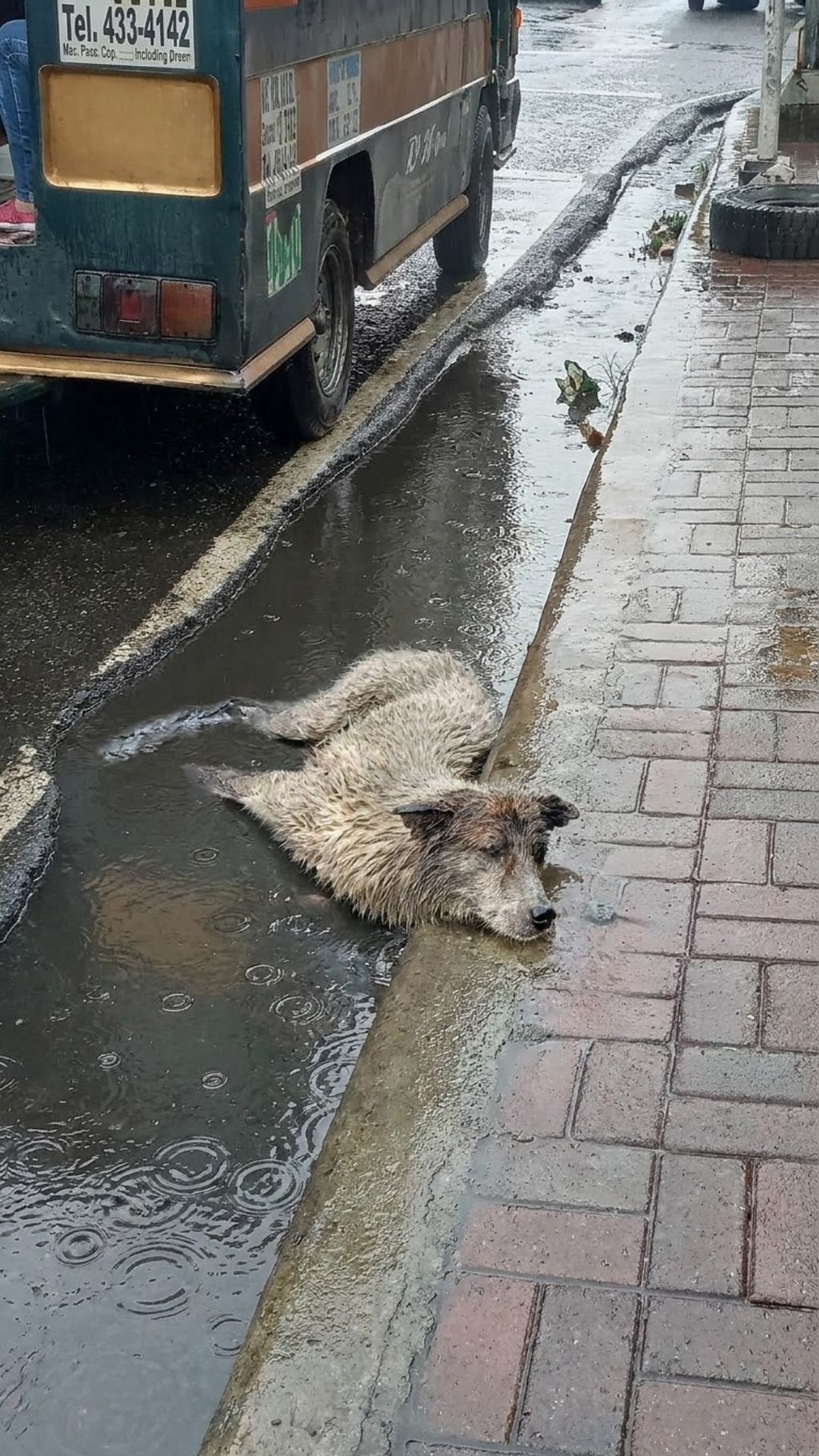
Borgie was lying in a puddle beside a bus stop, soaked by the rain and unable to get himself to safety. He had been hit by a car, and according to the report, he had remained there since the previous night. As people passed nearby, he cried out in pain, but no one came to help him.
By the time Borgie was finally rescued, the situation had become deeply concerning. He was secured and taken into care, where he could be monitored and examined. X-rays revealed no broken bones, but his hind legs remained immobile. The team also discovered pellets embedded in his back, adding another troubling detail to a dog whose full history was unknown.
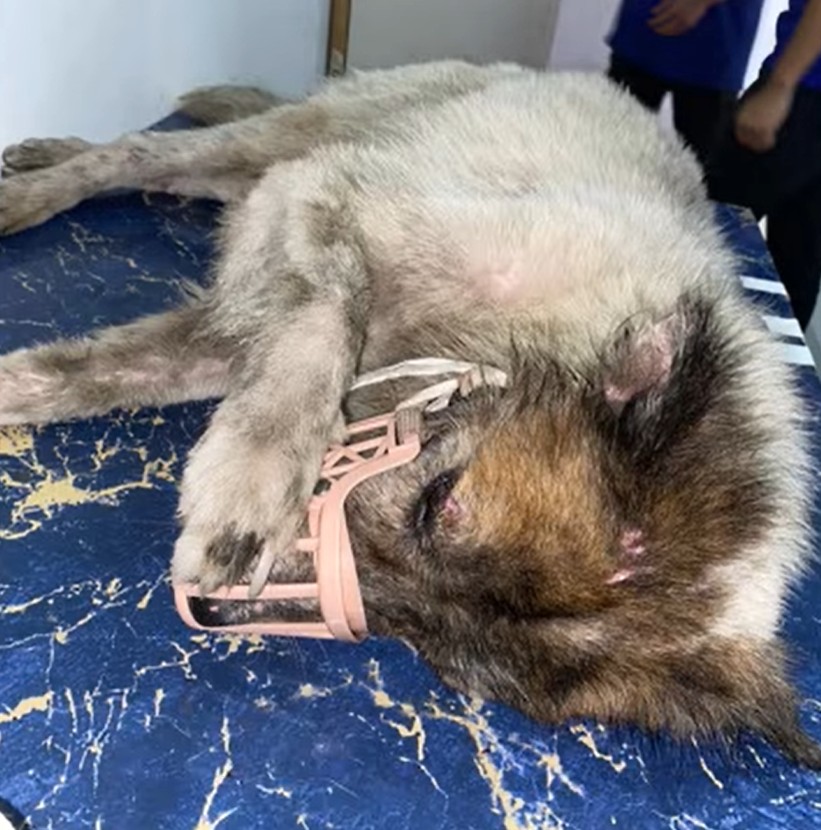
There was still much they did not know about Borgie’s injuries or how well he would recover. The hours he had spent lying in the puddle may have aggravated his condition, and his rescuers worried that he might never regain the ability to walk normally. For now, all they could do was begin his treatment and watch closely for the smallest sign of progress.
VIDEO: Borgie Was Left Injured in the Rain, but His Fight to Walk Began Again
The First Signs of Progress Were Small
Borgie remained under observation while his caregivers worked to understand his condition and support his recovery. Although the X-rays had not revealed any fractures, his inability to move his hind legs was still a serious concern. The team knew that improvement would require patience, consistent care, and regular monitoring.
Five days after his rescue, there was encouraging news. Borgie had begun eating on his own, an important change after the ordeal he had endured. His expression also seemed brighter, and he gradually showed more of his personality.
Still, he could not stand up without help. His caregivers provided calcium supplements and vitamins, along with physiotherapy as often as they could manage. The exercises were part of the daily routine, helping Borgie work toward movements that other dogs performed without thinking.
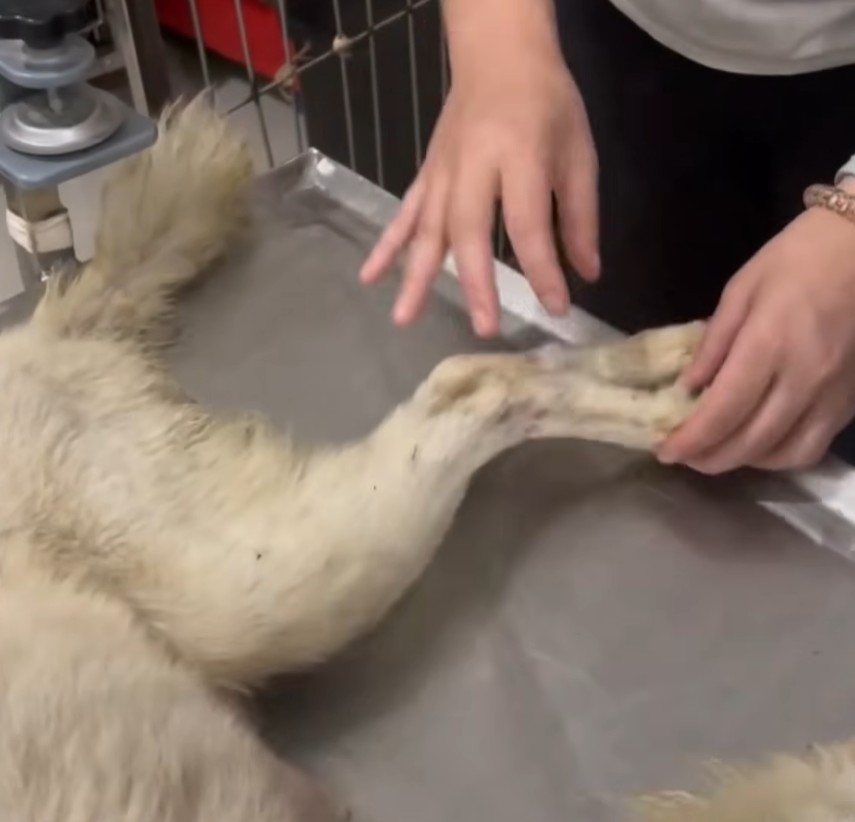
Recovery was not a straight path, and there was no guarantee that his mobility would return fully. But each session gave the team another opportunity to see how he responded and whether his strength was improving.
The Day Borgie Stood on His Own
Then came a moment his caregivers had been hoping to see. After continued treatment and physiotherapy, Borgie managed to stand up by himself and take a few steps.
His movements were still difficult and unsteady, but the progress meant a great deal to the people who had watched him struggle to move. What once seemed uncertain had become a small, visible sign that his efforts were making a difference.
Borgie’s injured leg was not expected to heal completely, so the team knew that his recovery would continue to require attention. They remained committed to physiotherapy and helping him become as strong and comfortable as possible.
“Progress does not always mean returning to the way things were before; sometimes, it begins with one difficult step that was impossible a little earlier.”
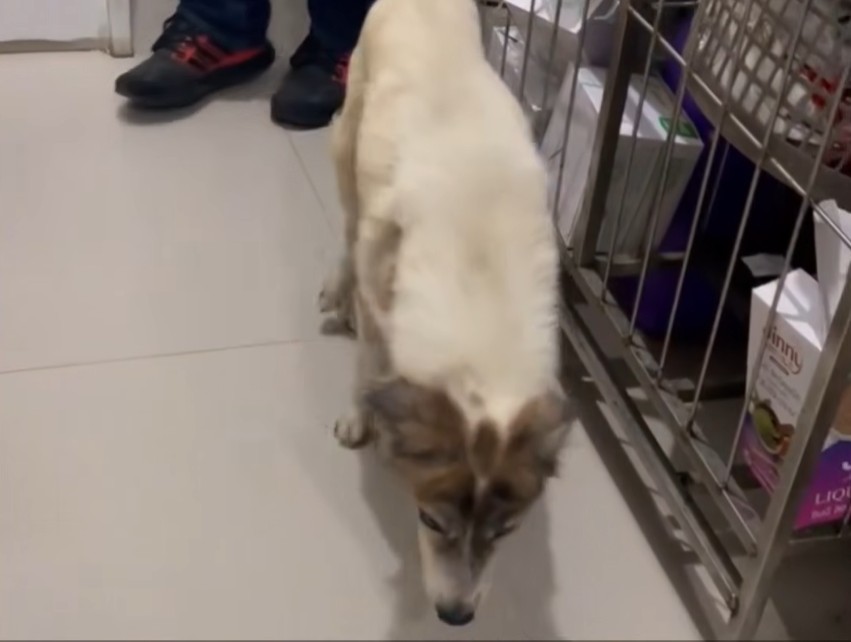
As the days passed, Borgie grew stronger. Despite the traumatic experience he had endured, he continued to show affection toward the people caring for him. His journey was no longer defined only by the pain and helplessness of that rainy night. It was also becoming a story of persistence, care, and gradual change.
Seven Months Later, Borgie Had a Family of His Own
Borgie’s recovery continued beyond those first steps. His caregivers kept working with him, supporting his progress while understanding that his injured leg might never fully recover.
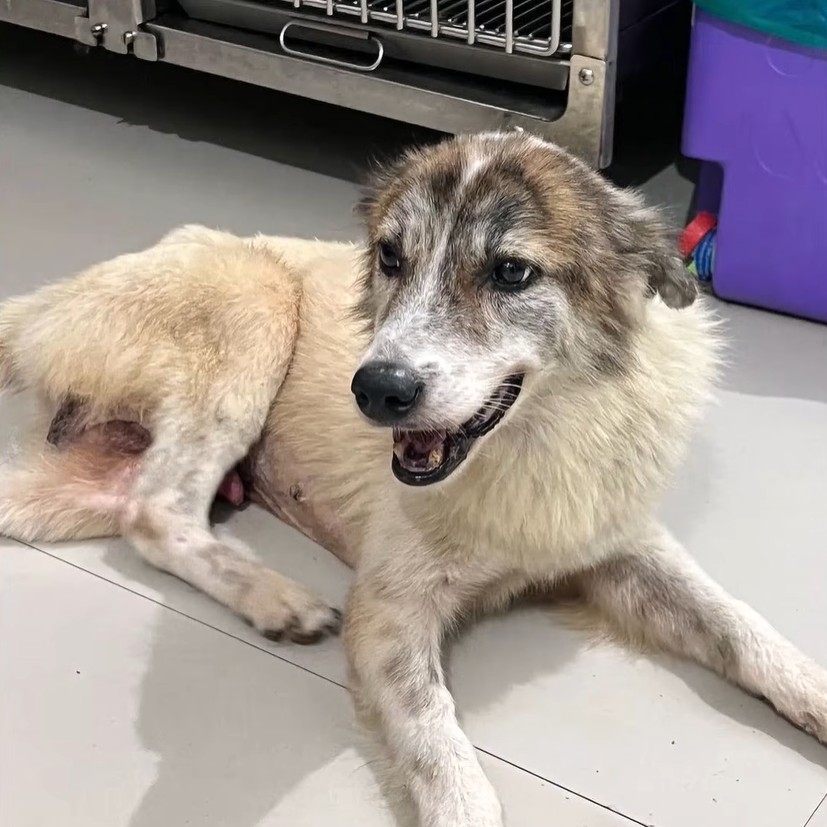
Seven months after his rescue, another important chapter began: Borgie found his forever family.
The dog who had once lain helpless in a puddle was now living in a home with people ready to care for him. His transformation was striking, and he was described as a much happier dog, often seen with a cheerful expression around his new family.
His future had changed in ways no one could have promised during those first days of treatment. At the bus stop, his immediate need had been relief from the rain, pain, and immobility. After months of care, he had not only made progress in his recovery but also found a permanent place to belong.
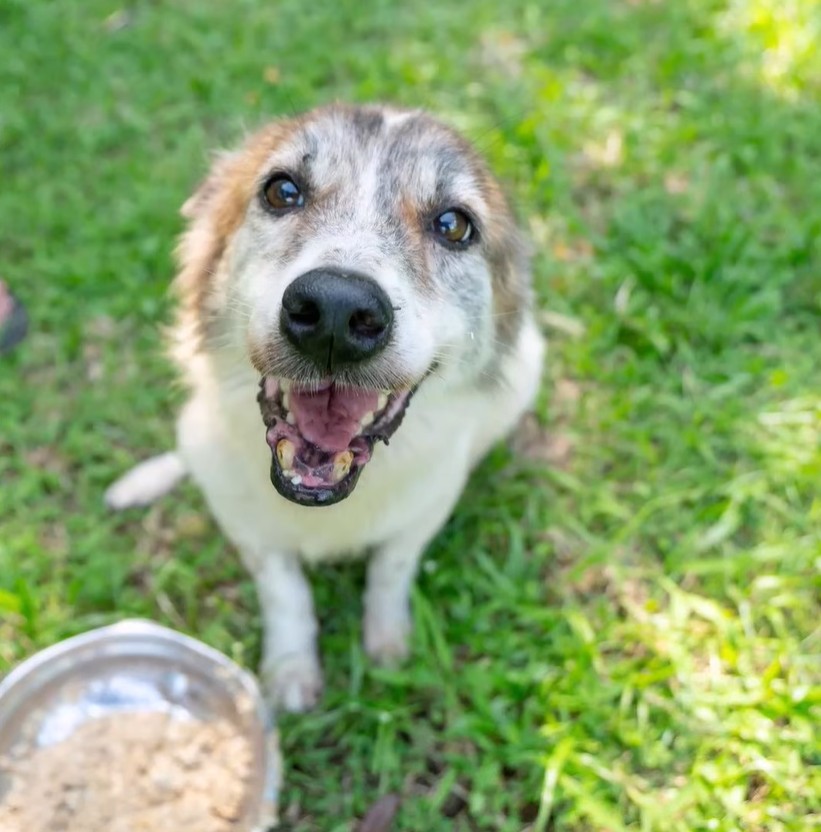
Borgie’s injured leg remained part of his story, but it no longer defined his entire life. He had people beside him, continued support for his needs, and a home where he could enjoy the companionship he had been missing.
“Borgie’s story began with people passing him by, but it continued because others chose to stay, help, and believe that his life could still hold something good.”