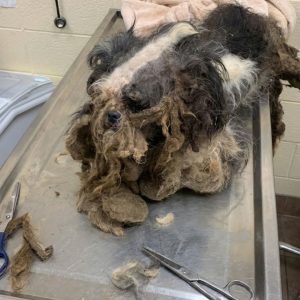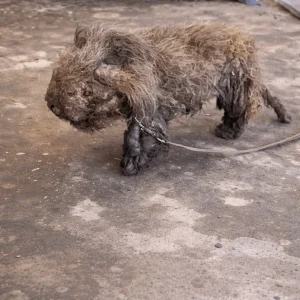
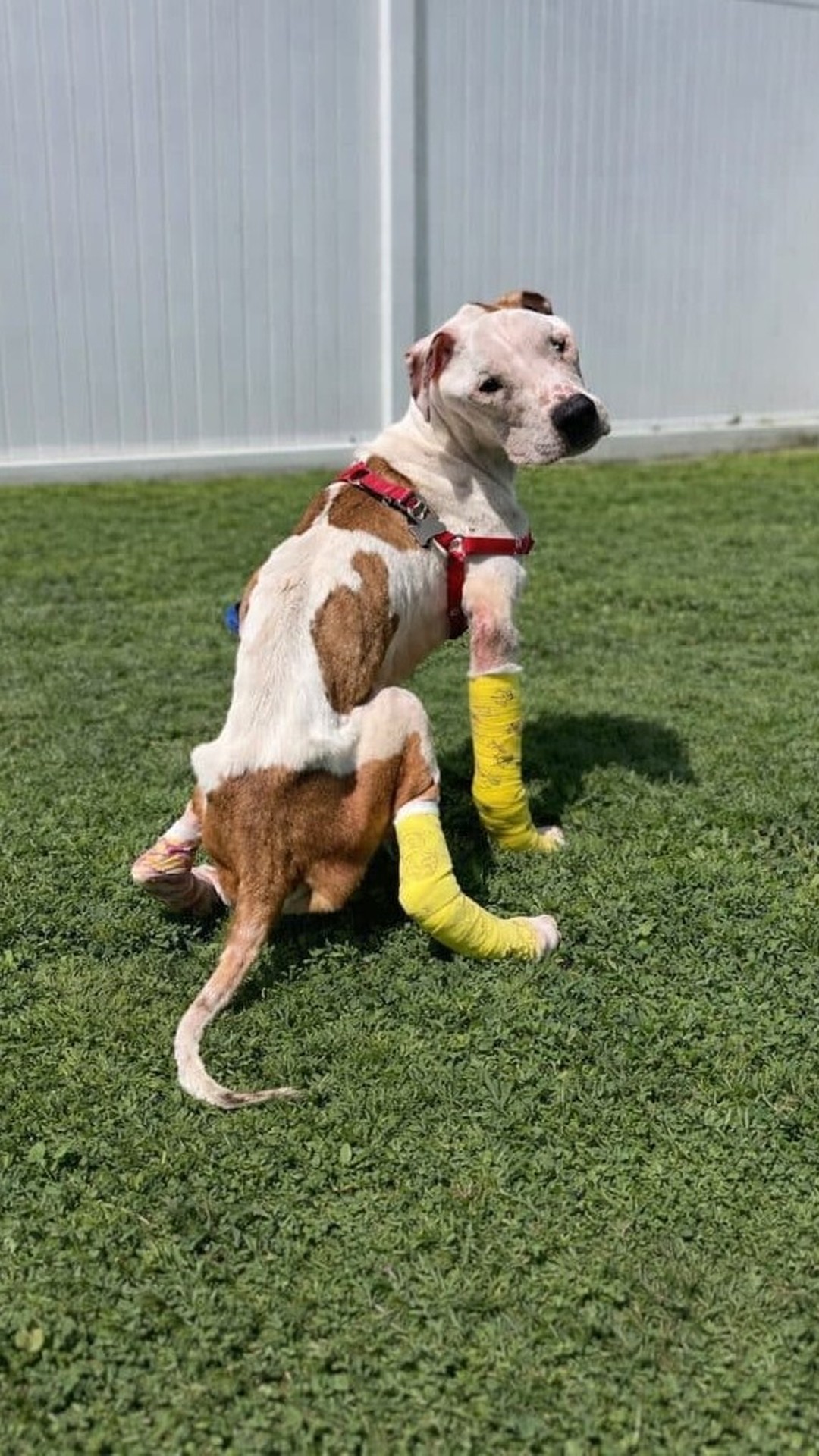
When officers first discovered a three-year-old Pit Bull-mix named Jobee in a Roxbury apartment early one July, the reality of his situation was difficult to process. He had been left in a cage, subjected to extreme neglect, and was later found abandoned near a local dumpster just hours after that initial check.
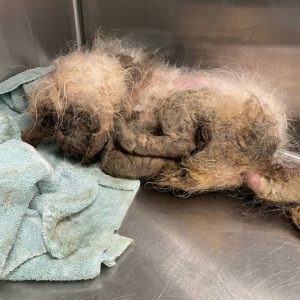
At merely 24 and a half pounds, Jobee was half of his healthy body weight. The severe lack of nourishment had left him so weak that he could barely mobilize, stumbling as he tried to put weight on his frail, exhausted legs.
Rushed to the Angell Animal Medical Center, the veterinary team quickly realized they were facing one of the most critical cases they had ever encountered. Jobee had absolutely no food in his system, and his body was on the verge of shutting down entirely as they brought him into the emergency room.
VIDEO: An Abandoned Dog Begins His Journey To Recovery
Navigating A Critical Healing Process
The medical staff had to be incredibly careful in their approach to nursing the fragile dog back to health. Because his digestive tract had nearly stopped functioning, they could not simply offer him a bowl of food.
Instead, Jobee was placed on IV fluids, allowing his body to slowly absorb the life-saving hydration it had been denied for so long.
The physical toll of his past was heavy. The late-stage starvation had caused him to lose circulation in his extremities, leading to open wounds and requiring a partial amputation of his tail due to severe tissue damage.
“Physical recovery often requires a body to re-learn how to function after being pushed to its absolute limits.”
Despite the intense medical challenges, his caretakers carefully monitored his progress every hour, ensuring he was kept warm and as comfortable as possible.
The Turning Point
For a dog in such a serious condition, the path forward is never guaranteed. Animals enduring this level of hardship often lose the fight simply because they no longer have the energy to keep going.
But Jobee was different.
“We’ve seen in previous cases that dogs this neglected essentially give up and do not recover—but it was clear from the first minute in our care that Jobee wanted to live,” noted Mike Keiley, an adoption center director who met the dog during his treatment.
Within two weeks of intensive care, a significant shift occurred.
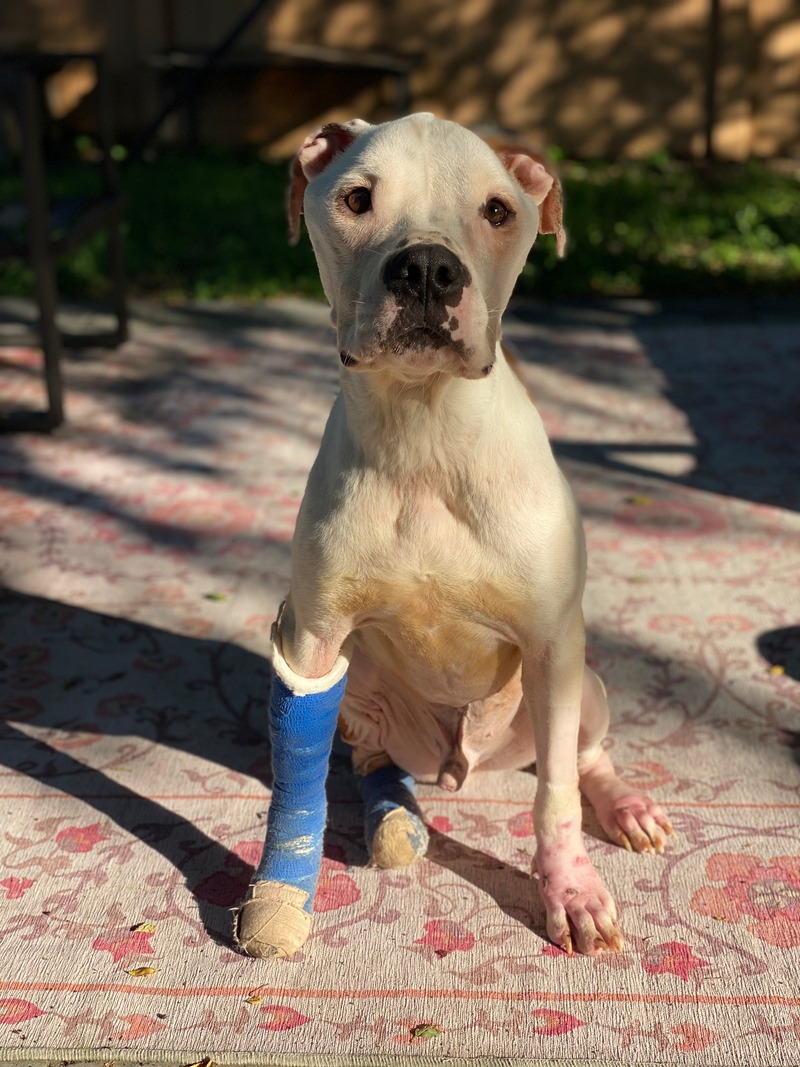
Jobee’s digestive system woke up, and he was finally able to start eating solid foods again. The meals were a quiet victory, marking the moment his body began to accept nourishment and actively rebuild its strength.
By mid-July, the dog who could barely stand on his own was strong enough to be discharged from the medical center. He was transferred to a safe adoption facility, leaving the darkest chapter of his life behind. Another dog from the same home, Remy, was also safely removed and placed in a foster environment.
Jobee’s eyes, once clouded by pure exhaustion, slowly regained a bright, steady spark.
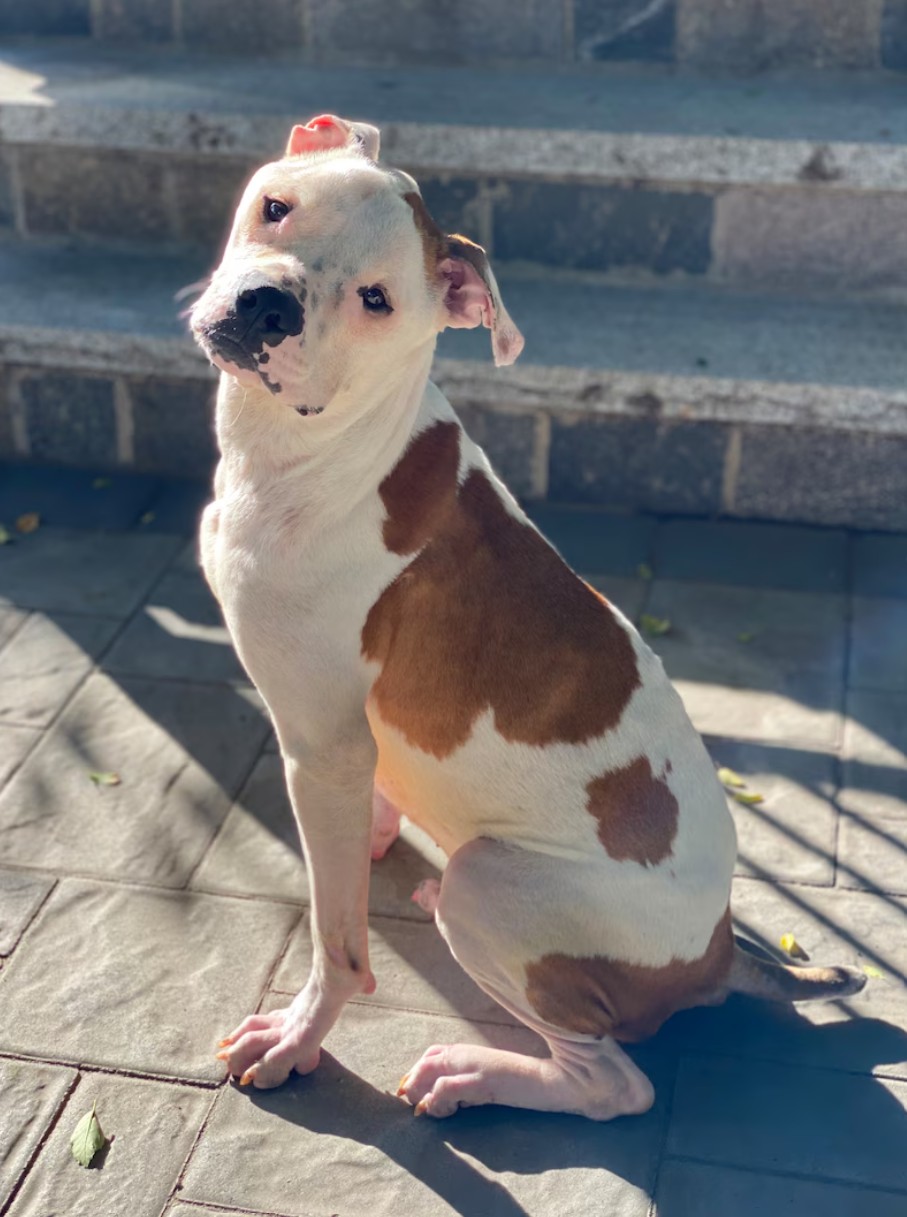
He no longer has to worry about an empty bowl or a cold, lonely cage. He spends his days resting comfortably under the watchful care of the rescue staff, regaining his true personality as he waits for a loving family to take him home.
“Sometimes, all it takes is a safe space for an animal to realize their hardest days are finally over.”