Betrayal is a heavy, suffocating weight, but it feels even darker when the victim is a creature who has known nothing but loyalty.
The landfill was a desolate, jagged mountain of refuse, a place where the world’s discarded items are left to be forgotten in the wind.
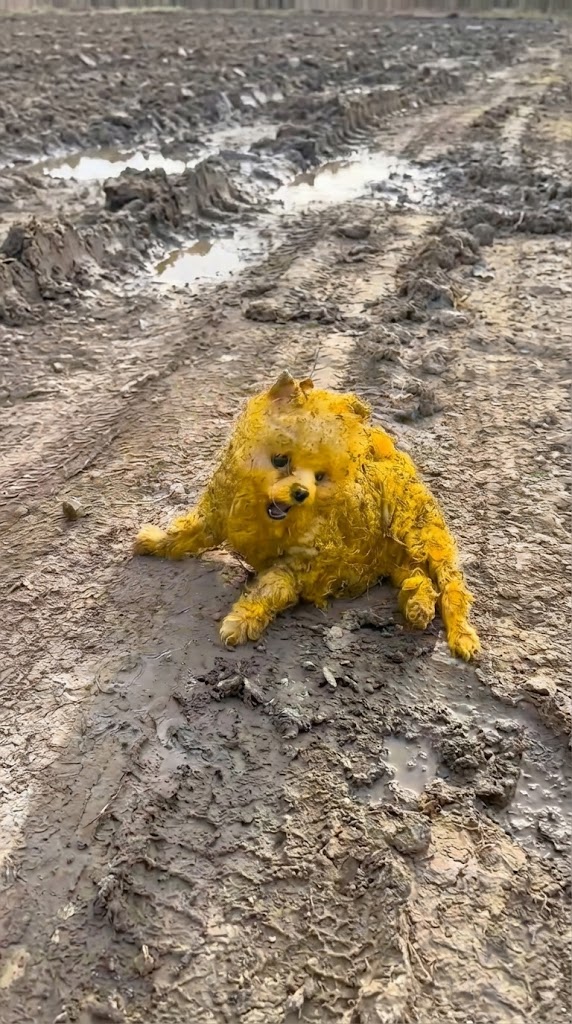
There, shivering amidst the rotting trash, sat a small dog whose entire coat had been dyed a garish, artificial yellow, masking the filth of her surroundings.
She was paralyzed, her hind legs motionless against the debris, and as she looked up at us, I found myself questioning if a soul so shattered by human cruelty could ever learn to trust again.
VIDEO: Abandoned in a Landfill, This Paralyzed Dog Was Covered in Paint and Left to Die
The horrific state of the dog revealed a history of neglect that began long before she reached the landfill.
We arrived at the site after a concerned tip, our boots crunching loudly over the uneven ground of the dump.
The yellow paint on her fur was not a mistake; it was a cruel indicator of the environment she had been forced to endure.
Through our conversations with local residents, a heartbreaking story began to emerge from the silence.
She had once been a beloved pet, but a terrible accident left her hind legs paralyzed and unable to support her weight.
Instead of offering the medical care she needed, her owners had discarded her like a piece of broken machinery.
The bucket of paint was likely the final indignity in a series of neglectful events that led her to this lonely, trash-filled grave.
Her initial aggression was not a sign of her character, but a desperate shield against more pain.
When we approached to offer help, she recoiled, growling with a fury born from genuine terror and physical suffering.
Her mouth opened in a silent scream, and she snapped at our reaching hands, clearly bracing for the next blow.
“I know you are hurting, and I know you are terrified, but we are here to stop the pain,” I murmured, holding my distance.
It was impossible to blame her for the rejection; she had been betrayed by the only humans she had ever known.
We moved slowly, gently luring her into a transport carrier while maintaining a safe, reassuring rhythm.
She did not know that the vehicle was not heading toward another nightmare, but toward the very first sanctuary she had ever touched.
The veterinary clinic became the first place where she finally learned the meaning of gentle touch.
Once inside the sterile, quiet environment of the clinic, the doctors began the grueling process of cleaning her ravaged body.
They had to carefully shave away the dyed, matted fur to reach the skin beneath, which was inflamed from long-term exposure.
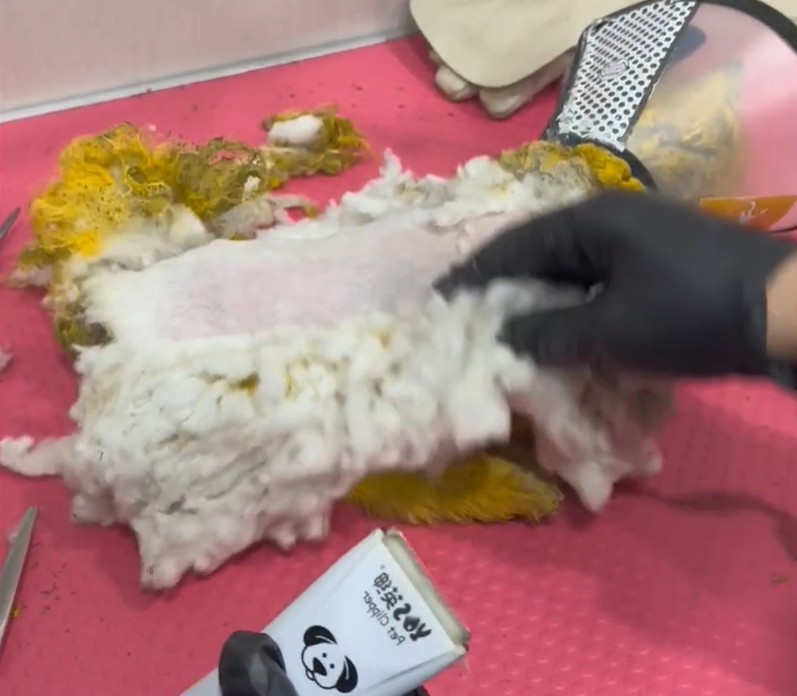
During the initial exam, she was tense and defensive, still expecting the clinical touches to turn into something sharp or violent.
But as the medical team continued their work, administering treatment and cleaning her wounds, something profound shifted in her posture.
The frantic energy in her eyes began to dim, replaced by a confused, flickering light of curiosity.
She began to realize that no matter how much they prodded, no pain followed; only the soothing sensation of care remained.
A wagging tail amidst the recovery process proved that her spirit had not been completely broken.
Hours after the initial treatment, the dog who had growled at our every move began to change right before our eyes.
She looked up at the veterinary staff, and for the first time, her tail gave a hesitant, rhythmic thump against the table.
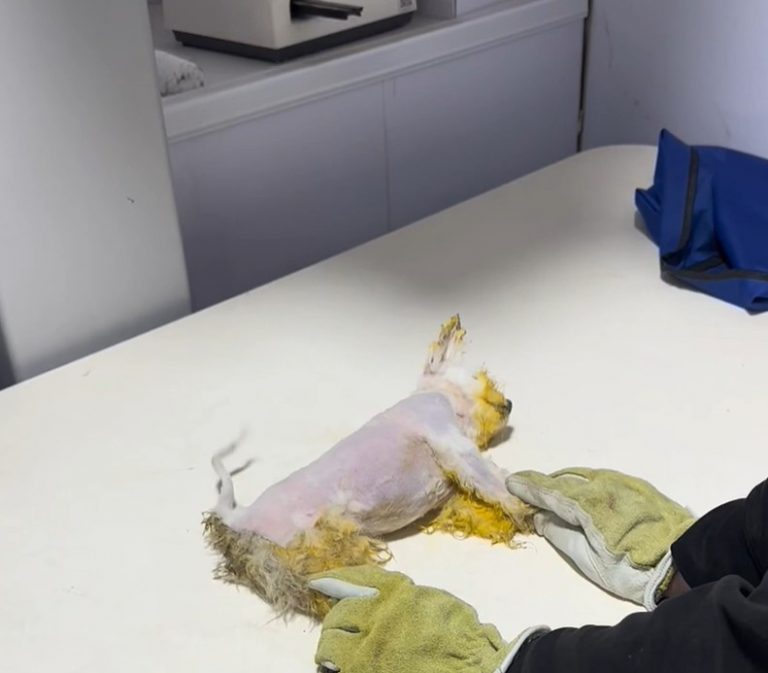
It was a small, delicate movement, but it carried the weight of a massive emotional breakthrough.
She seemed to understand that the people in white coats were not there to hurt her, but to carry her burden.
We still awaited the final X-ray and blood test results to understand the full extent of her internal injuries.
Yet, watching her lean into the touch of a caregiver, I knew that the hardest part of her journey was already behind us.
Healing a heart is a much slower process than healing a wound, but she has already taken the first step.
The path ahead for this little survivor will involve intense rehabilitation, potential physical therapy, and endless patience.
She will need to relearn how to navigate the world, not just with her legs, but with the confidence of a dog who is truly loved.
Her story is a painful reminder that while humans are capable of immense cruelty, we are also capable of redemption.
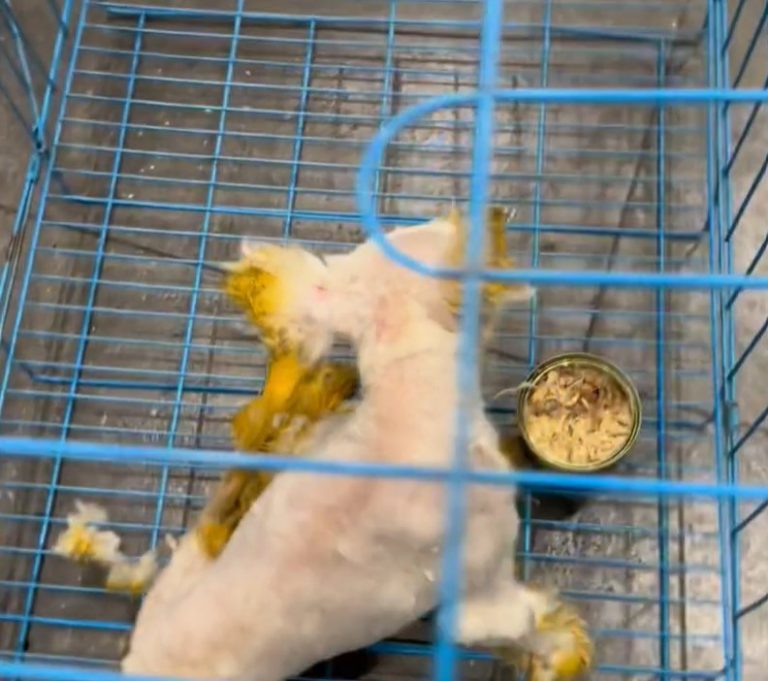
We are committed to helping her find a home where her past is nothing more than a distant, fading shadow.
“She survived the dump, she survived the betrayal, and now, she will survive because someone finally decided to stop and care,” one of the doctors noted softly.
Seeing her resting peacefully in her crate, I am certain that the wag of her tail is just the beginning of her new life.