Heavy rains had turned a newly cleared construction site into a vast stretch of cold, thick mud. As Steven and his crew walked the terrain to take photographs and survey the land for their upcoming project, their focus was entirely on the blueprints. But amid the rutted ground and deep puddles, a faint, struggling movement caught Steven’s eye. There, trapped in the heavy earth, was a tiny animal fighting a losing battle.
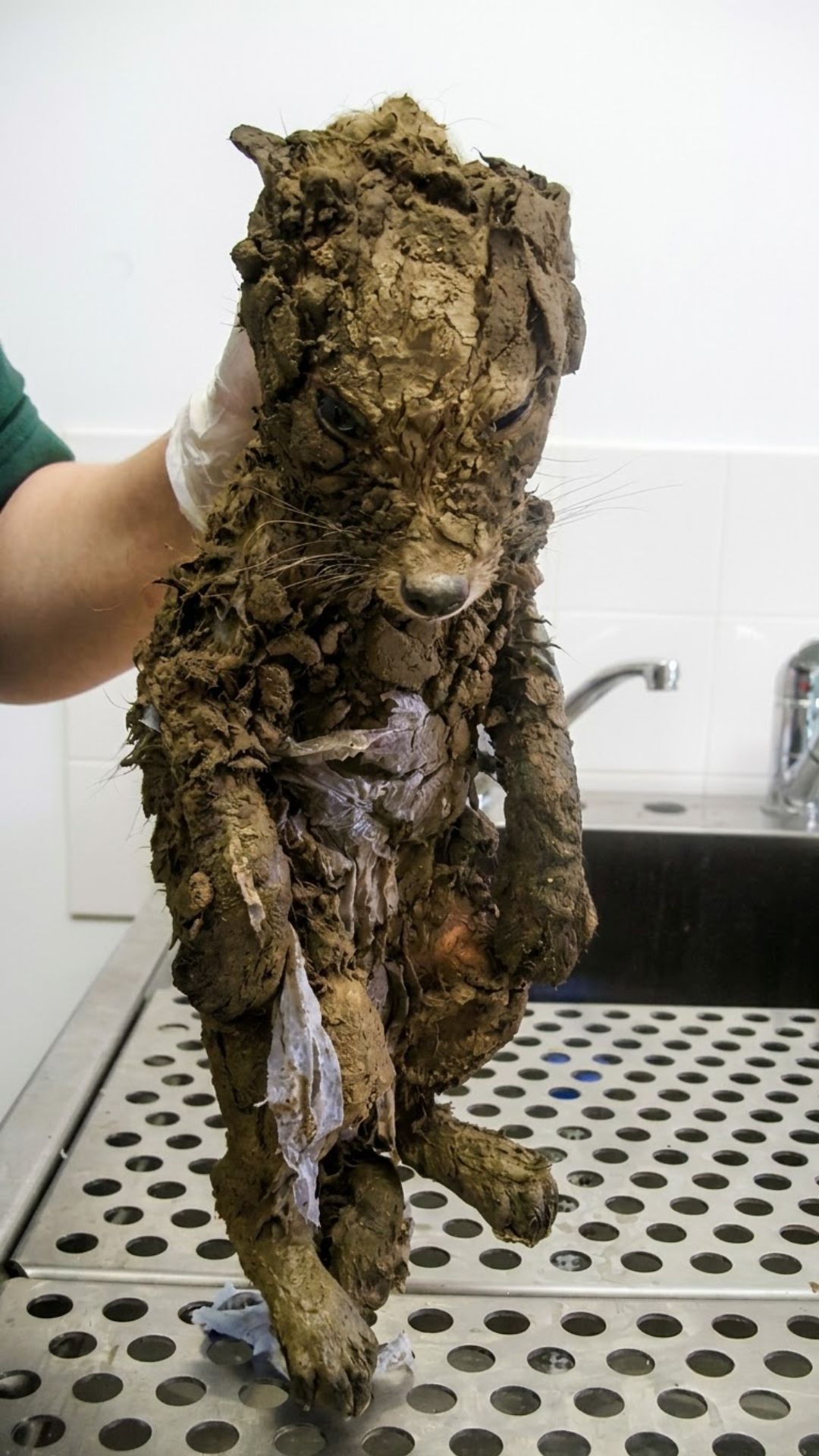
The creature was entirely encased in hardened layers of mud, leaving it nearly motionless and completely unrecognizable. It looked like a small, desperately exhausted puppy that had tumbled into the deep foundations left behind by the previous clearing crew. Every shallow breath seemed to drain what little energy the animal had left, its fragile body weighed down by the freezing, wet dirt.
Realizing how critical the situation was, Steven immediately abandoned his survey and sank to his knees in the muck. He began carefully pushing the mud aside with his bare hands, desperately trying to free the helpless animal without causing it more pain. As he finally lifted the trembling, heavily coated body from the ground, he looked down at the barely breathing creature and knew they had only a narrow window of time.
VIDEO: Construction Worker Rushes Mud-Covered ‘Puppy’ To The Vet
A Race Against Time
Steven left his crew behind and rushed the animal to his truck, determined to find help immediately. The nearest veterinary clinic was a fifteen-minute drive away, but Steven pushed through the route as safely and quickly as he could.
During the short journey, the tiny animal grew increasingly quiet.
The stillness in the truck was a heavy reminder of how severely the ordeal had drained the creature’s strength. Arriving at the clinic, Steven was met outside by a veterinary assistant who immediately took charge of the emergency.
Because the on-call veterinarian was finishing another procedure, the staff wasted no time starting supportive care. They attempted to offer the animal a drink, but it was far too weak and disoriented to even accept water.
“Sometimes, a complete lack of response is the clearest indicator of how close a body is to shutting down.”
Recognizing the critical state, the assistant quickly set up an IV to deliver essential fluids directly into the animal’s system. At the same time, she began gently dabbing away the thickest layers of dirt with a cloth and warm water.
It was a delicate, painfully slow process. The animal let out small cries of distress as the hardened mud was carefully peeled away from its skin, revealing the sheer exhaustion underneath.
Beneath The Surface
When the veterinarian finally stepped into the room, he immediately began checking the animal’s vitals to assess the true extent of the damage. As he worked alongside his staff to remove the remaining crust of dirt, the true identity of their patient slowly came into view.
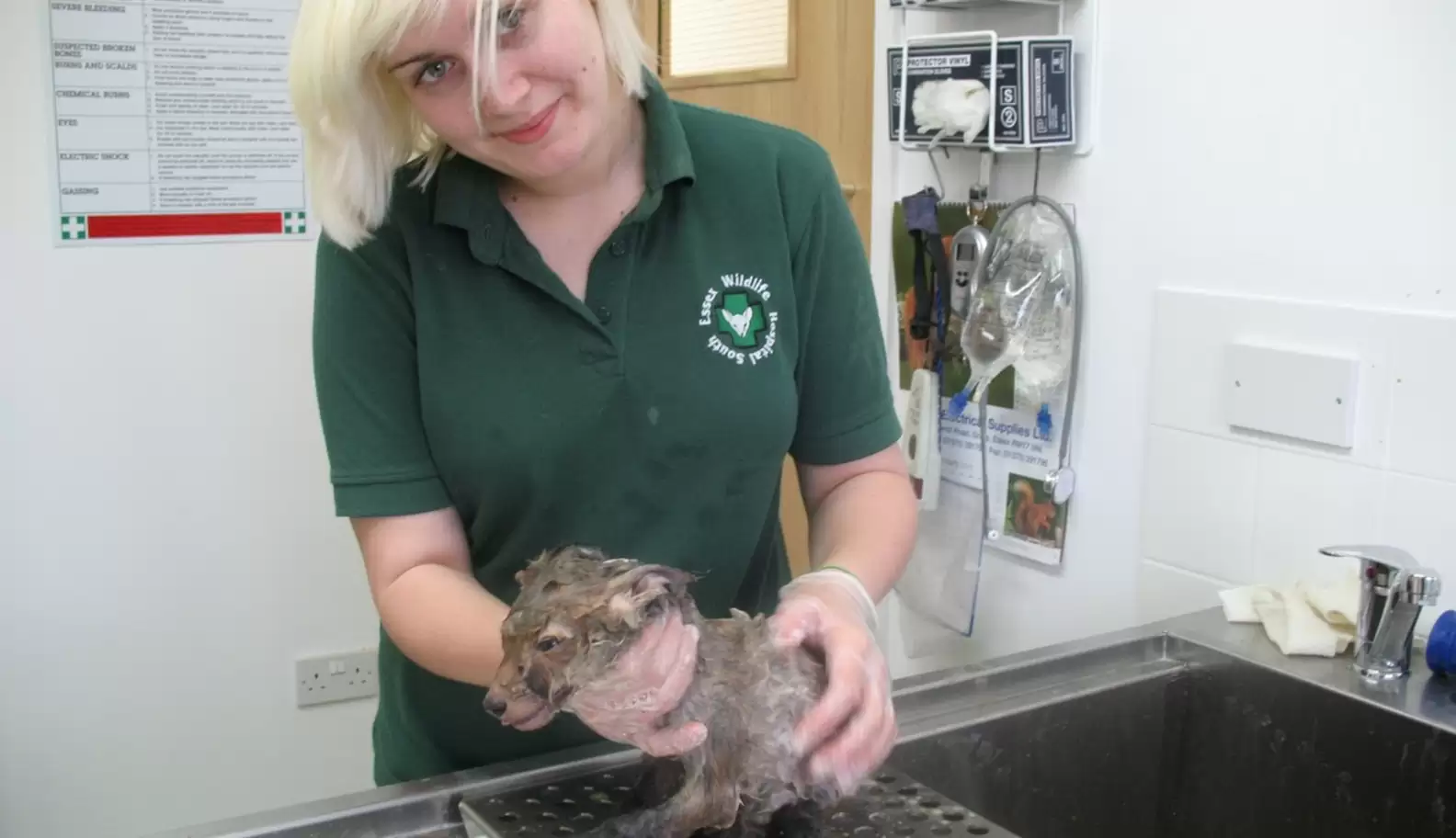
Steven had not pulled a puppy out of the deep mud.
Beneath the heavy layers of earth was a young, four-month-old wild fox cub.
The little fox had likely been exploring the area after his family’s habitat was disturbed by the initial land clearing. Disoriented and unfamiliar with the new, hazardous terrain, he had fallen into the deep foundations and become hopelessly trapped as the rains rolled in.
Sue Schwar, the founder of the South Essex Wildlife Hospital where the fox would eventually be transferred, noted that this is a tragically common occurrence. Wild animals frequently fall victim to human-made hazards, finding themselves unable to escape deep trenches or exposed foundations.
A Return To The Wild
Once the fox was fully stabilized and given a thorough, warm bath, the frightened, unrecognizable lump of mud transformed back into a vibrant, wild cub.
The shift was profound. The terrified, motionless creature that had barely been able to lift its head was now alert, taking in his surroundings with bright, curious eyes.
He was transferred to the care of the wildlife center, where experienced rehabilitators monitored his progress and ensured he was eating on his own. Without the heavy weight of the mud holding him down, his natural instincts quickly returned. He no longer needed human intervention, and that was exactly the outcome everyone had hoped for.
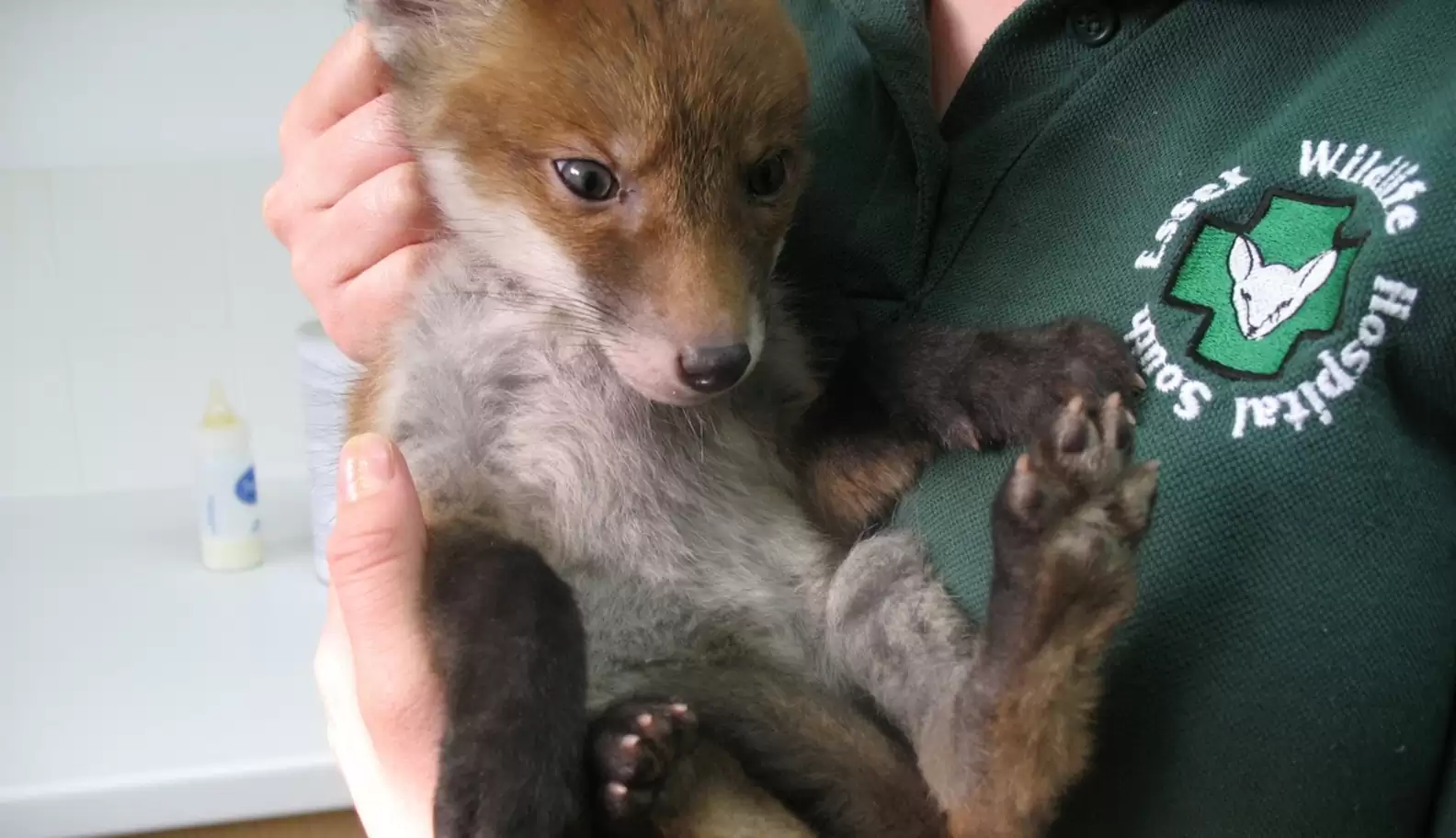
After regaining his full strength, the young fox was safely released back into a natural habitat, far away from the dangers of active construction zones.
“A successful rescue isn’t just about pulling an animal from the ground; it is about giving them the quiet space to become themselves again.”