Panic has a way of turning a simple mistake into a life-or-death struggle within a matter of seconds.
The old iron fence stood cold against the afternoon sky, its rigid bars keeping watch over a quiet neighborhood street.
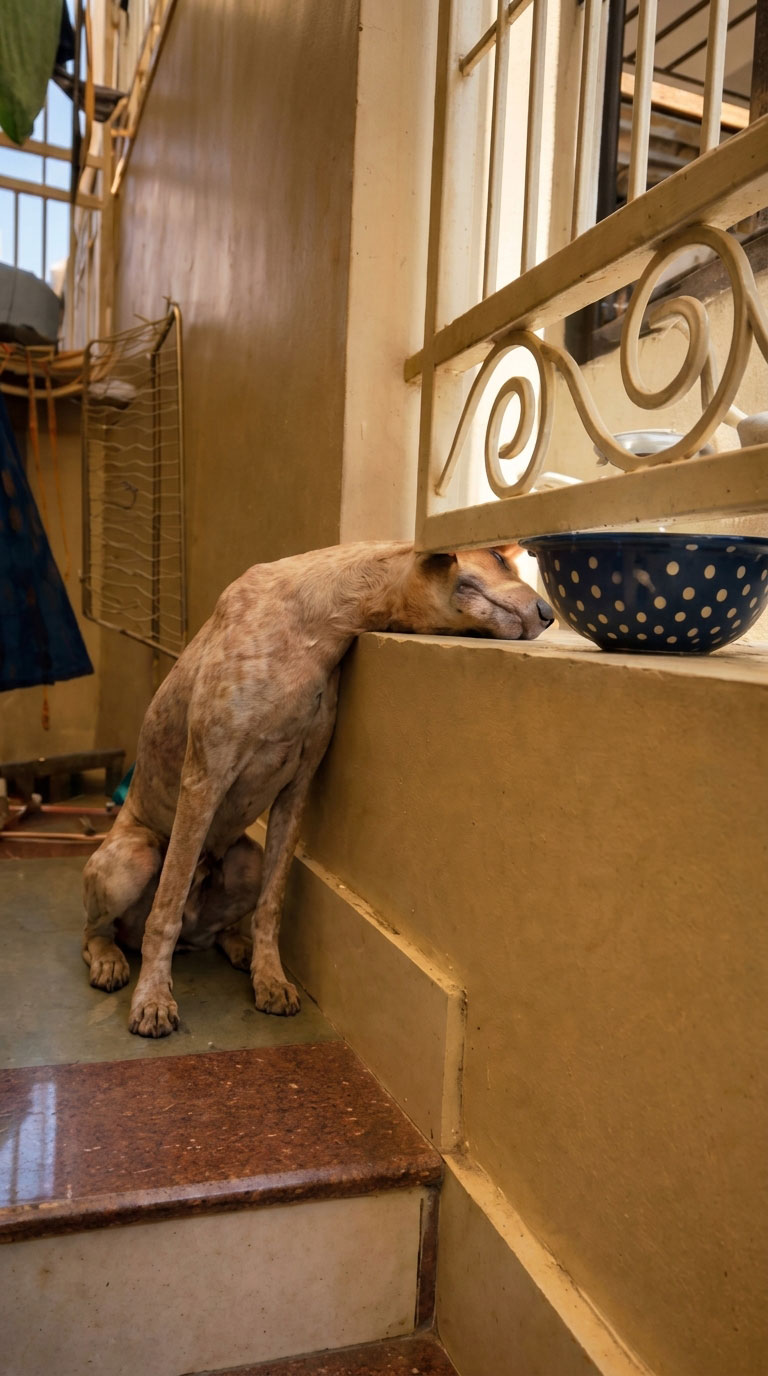
Beneath the rusted metal, a helpless stray dog lay completely paralyzed, his head wedged tightly between two narrow rails.
With every frantic breath, the cold iron seemed to press deeper against his neck, turning his desperate struggles into a dangerous trap that was rapidly closing in on his survival.
VIDEO: A Calm Touch and Clever Thinking Save A Dog Trapped In Iron Bars
The terrifying grip of panic threatened to exhaust his remaining strength.
He had likely wandered near the perimeter out of simple curiosity or perhaps in a desperate search for a stray scrap of food.
But the moment he realized he could not pull back, absolute terror took complete control of his fragile mind.
His heavy breathing filled the quiet air, and his entire body shook violently as exhaustion began to take its toll.
Every single movement he made only tightened the metal vice, turning his natural instinct to fight into a severe hazard.
Neighbors noticed the heartbreaking scene from a distance and quickly realized the poor creature would never survive this ordeal alone.
When our rescue team arrived on the scene, we resisted the natural urge to rush in with loud tools.
“If we move too fast, his panic will make him twist his neck and cause a fatal injury,” I whispered to the team.
We stood completely still for a long moment, studying the narrow space with absolute precision and quiet focus.
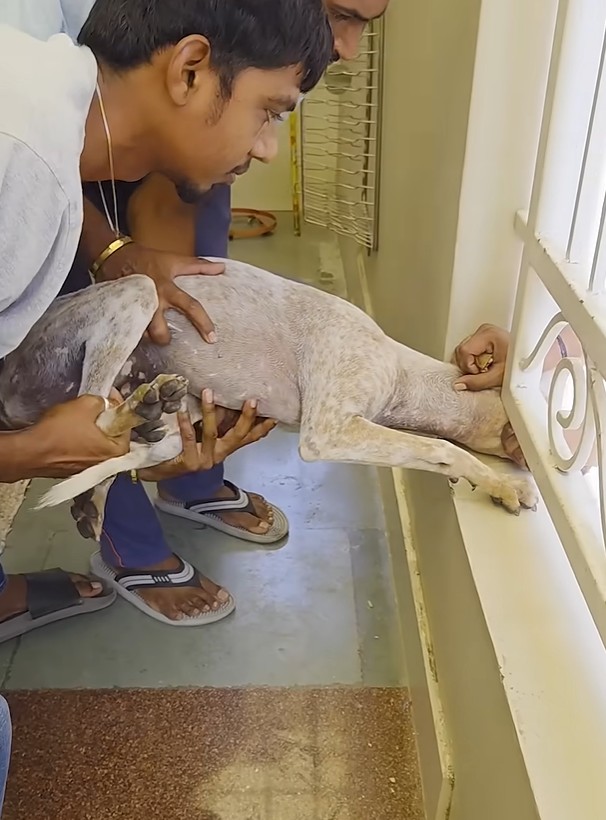
Choosing gentle patience over raw force completely changed the narrative.
Instead of pulling him backward or reaching for heavy machinery that might terrify him further, we chose a gentler path.
We carefully brought out a simple bottle of common cooking oil to ease the intense pressure.
Slowly and methodically, we poured the liquid around the rusted metal bars, thoroughly coating the tight space around his neck.
The primary goal was not to achieve a high-speed rescue, but to provide immediate, soothing relief from the friction.
For several agonizing minutes, our hands stayed completely steady as we gently guided his head rather than forcing it.
We kept our voices down to a soft murmur, projecting a sense of total calm into his racing heart.
Then, without any sudden movement or chaotic rush, the miracle finally happened.
His head smoothly slipped free from the iron grip, and the crushing tension vanished into the thin air.
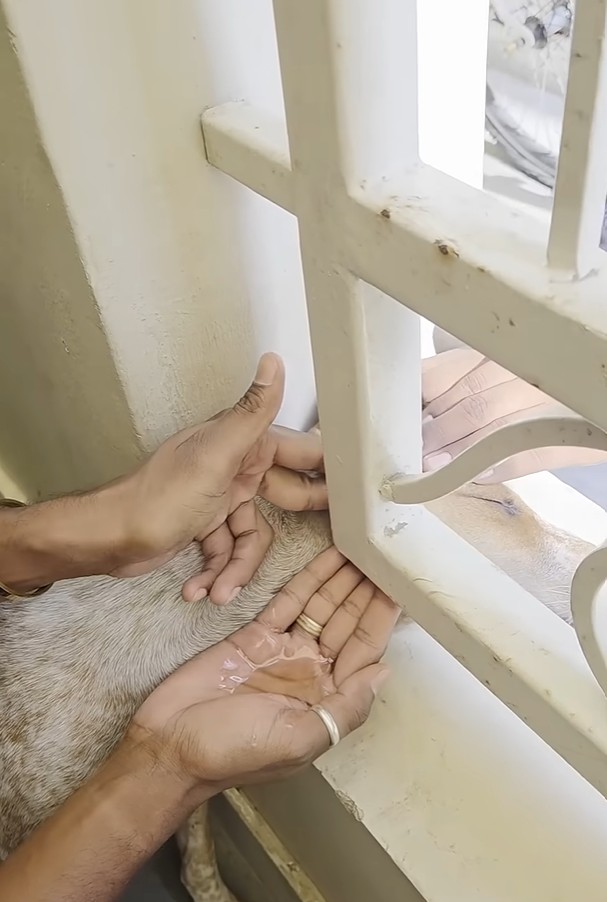
Finding a quiet sanctuary after the heavy cloud of fear cleared away.
The exhausted dog collapsed onto the pavement for a brief moment, overwhelmed by the sudden release of pressure.
His body finally let go of the immense strain it had been holding onto for hours.
We immediately offered him a bowl of fresh, cool water to help steady his erratic breathing.
He drank slowly, entirely at his own pace, as the sharp panic gradually faded from his expressive eyes.
A quick and thorough physical check confirmed that, against all odds, he had escaped without any serious injuries.
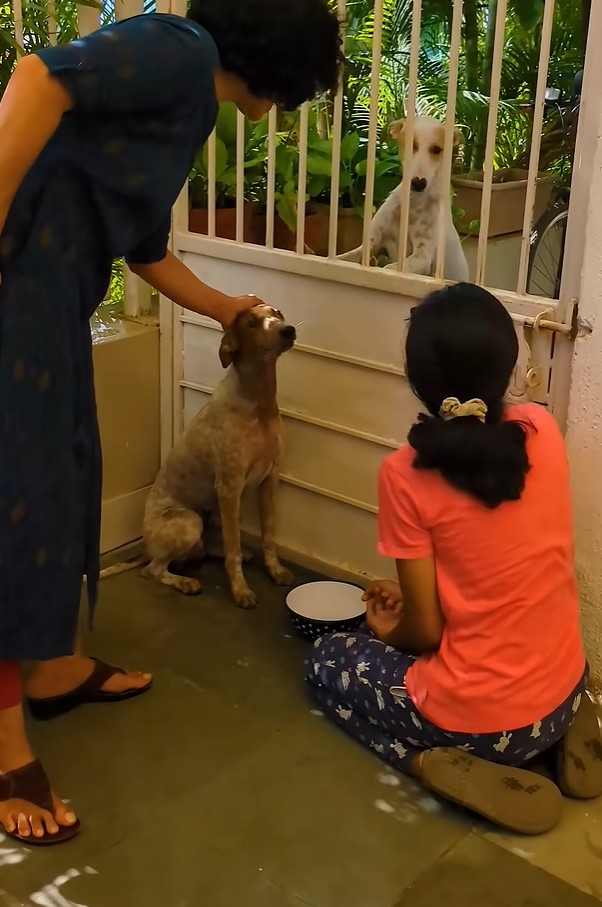
Once he regained his footing, he quietly trotted over to a nearby car, curling into the cool shade underneath.
In that hidden sanctuary, he could finally close his eyes and rest without the terrifying fear of being trapped.
“Not all life-saving moments require immense physical strength; sometimes, the greatest act of bravery is simply having the patience to slow down,” I reflected softly.