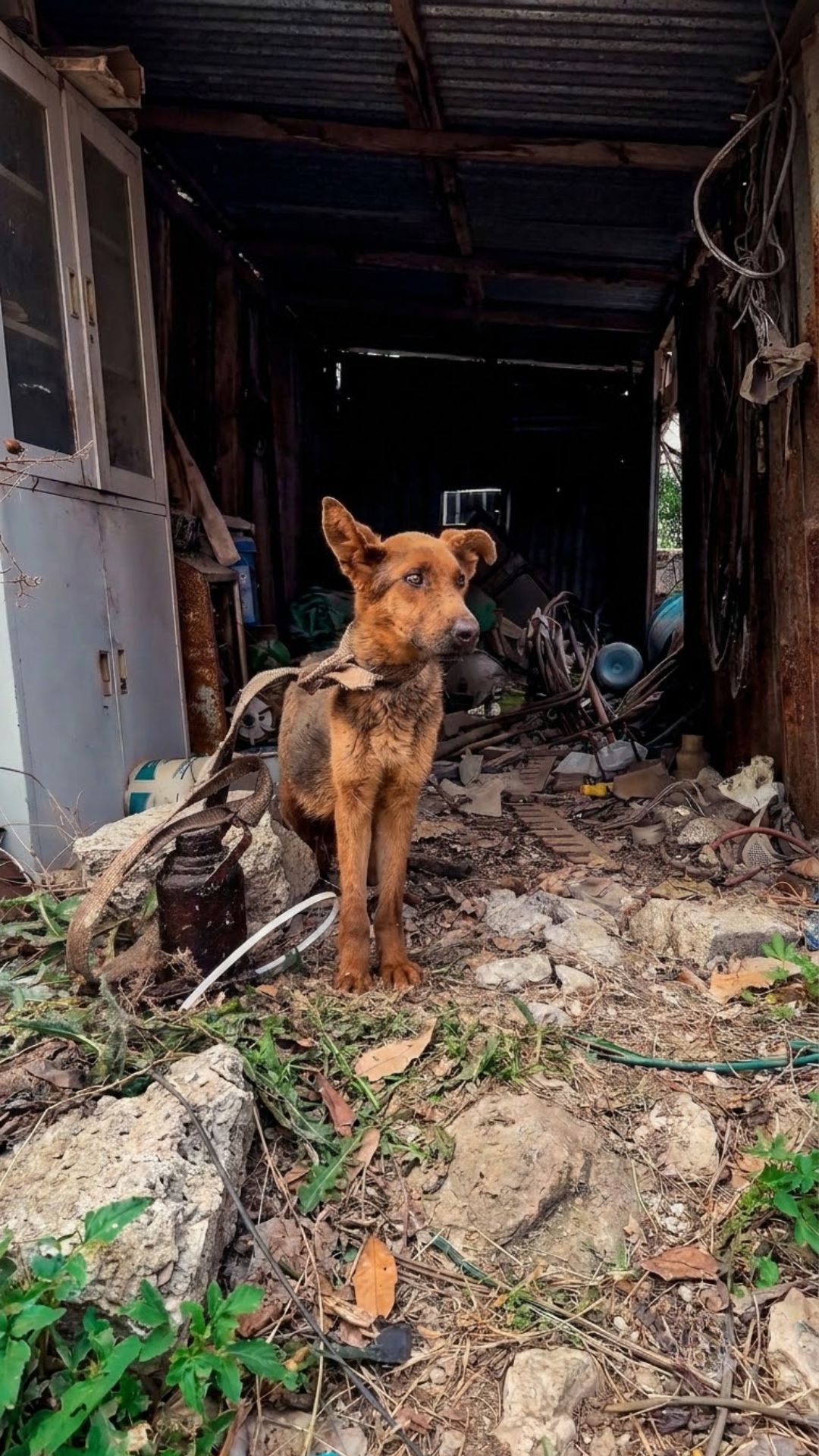
Fuwa’s story began in a neglected building, where a sick dog spent his days with an abdomen so swollen that his small body looked painfully heavy. His owner had taken him to a veterinary clinic, but the cost of treatment became more than he could manage.
When the owner finally contacted rescuers and asked them to take the dog, they came as quickly as they could. Fuwa did not resist when they removed his leash. He simply followed them, beginning a journey that would require far more than a single visit to the veterinarian.
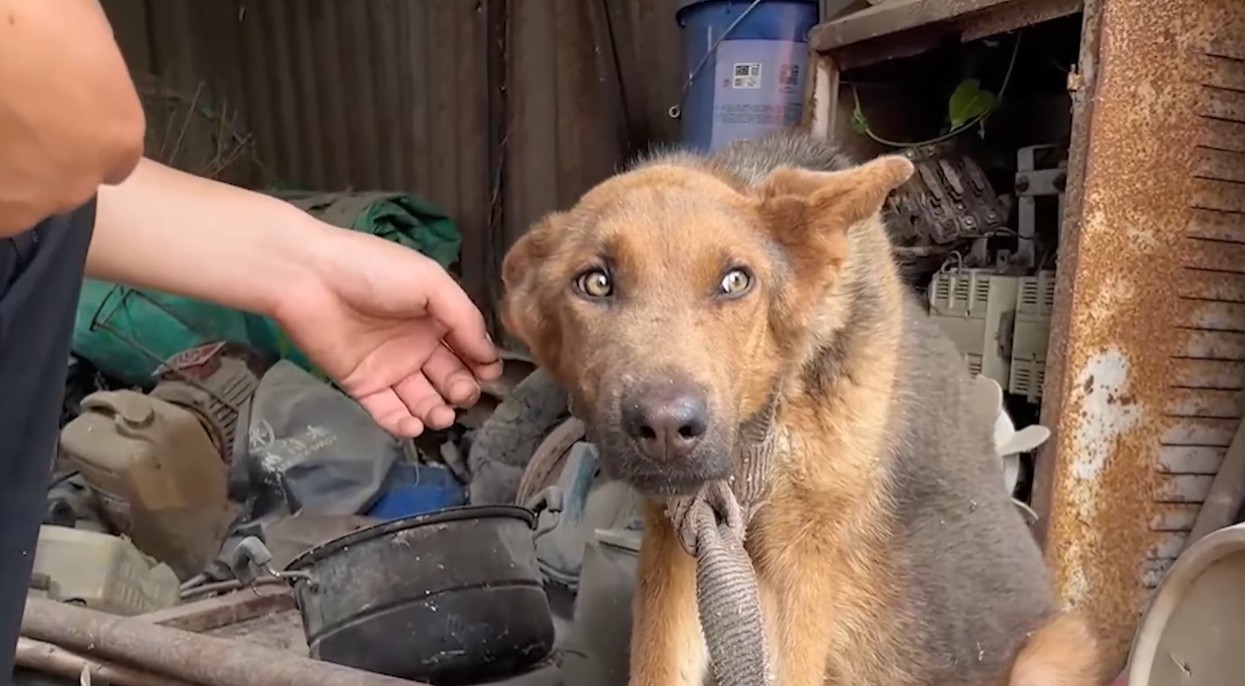
At the clinic, his swollen belly and trembling body revealed how serious his condition had become. Even when the veterinarian began examining him, Fuwa remained frightened but did not fight back. As the rescuers gently reassured him, he gradually settled enough for the examination to continue. What the tests revealed would shape the difficult weeks ahead.
VIDEO: The Rescue Team Who Refused to Give Up on Fuwa
The Examination Revealed More Than a Swollen Belly
The veterinarian discovered that Fuwa was suffering from ascites, a condition in which fluid accumulates inside the abdomen. Further tests identified roundworms and liver flukes, while blood work showed low albumin levels and abnormalities suggesting problems with his liver or biliary system.
Low albumin can allow fluid to move out of blood vessels and collect in the abdominal cavity. Combined with the parasitic infection and suspected liver complications, Fuwa’s condition required careful treatment rather than a quick solution.
The veterinarian developed a plan that included parasite treatment, medication to support liver function, and nutritional support to help rebuild Fuwa’s strength. Draining the accumulated fluid would also be necessary, but the procedure had to be approached cautiously because removing too much fluid could create additional risks.
Fuwa was weak, and his recovery after anesthesia was slow. A drainage tube was eventually placed, allowing the veterinary team to manage the fluid more carefully.
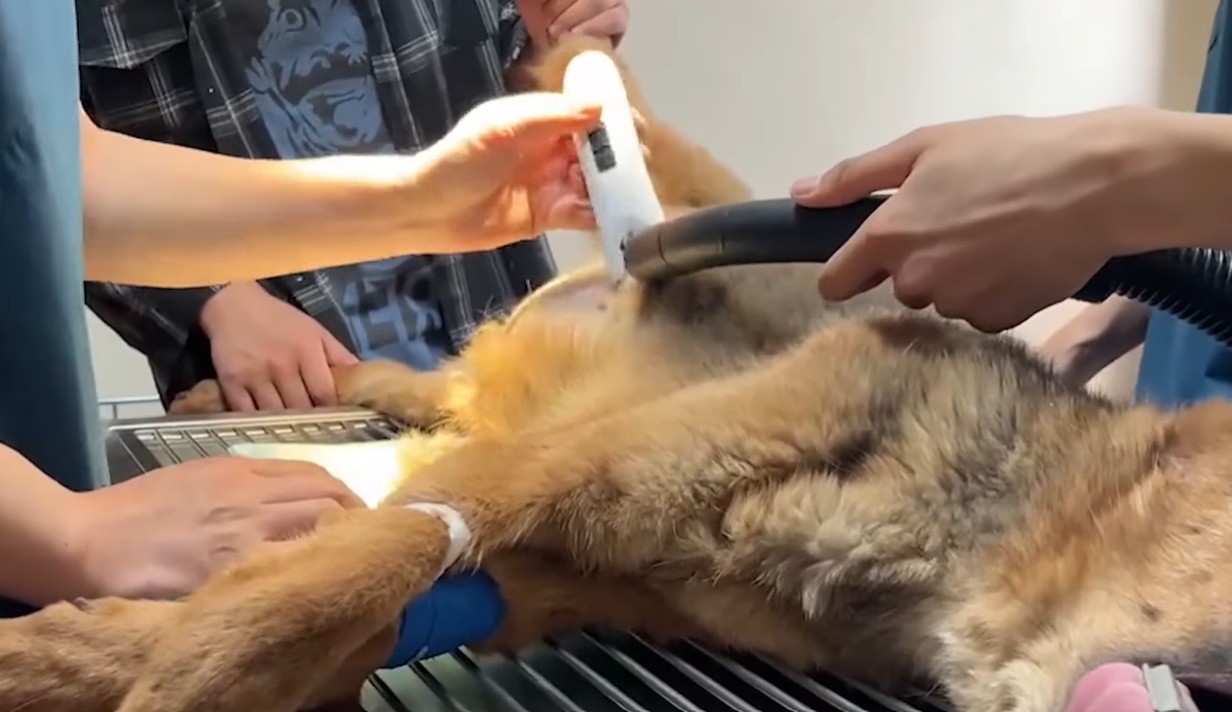
Meanwhile, his rescuers brought nutritious food, fresh chicken, and a soft mat to make his hospital stay more comfortable. They returned regularly, administered his prescribed medication, monitored his appetite, and followed the veterinarian’s instructions.
Progress came gradually. After several days, Fuwa began eating more eagerly, and his energy started to return. A follow-up examination showed that the inflammation was under control and his liver function had improved, although his albumin remained low and the ascites had not completely resolved.
There was still a long way to go.
The financial pressure was difficult, too. Each albumin infusion cost around $100, and the expenses continued to accumulate as Fuwa remained hospitalized. His rescuers had other animals depending on them at their shelter, and they took on part-time work to help cover the costs.
Yet whenever they visited Fuwa, they saw a dog slowly becoming more comfortable around the people caring for him.
“Sometimes, progress means being able to take another step forward, even when the hardest part of the journey has not yet passed.”
Thirty-Eight Days Between Hope and Uncertainty
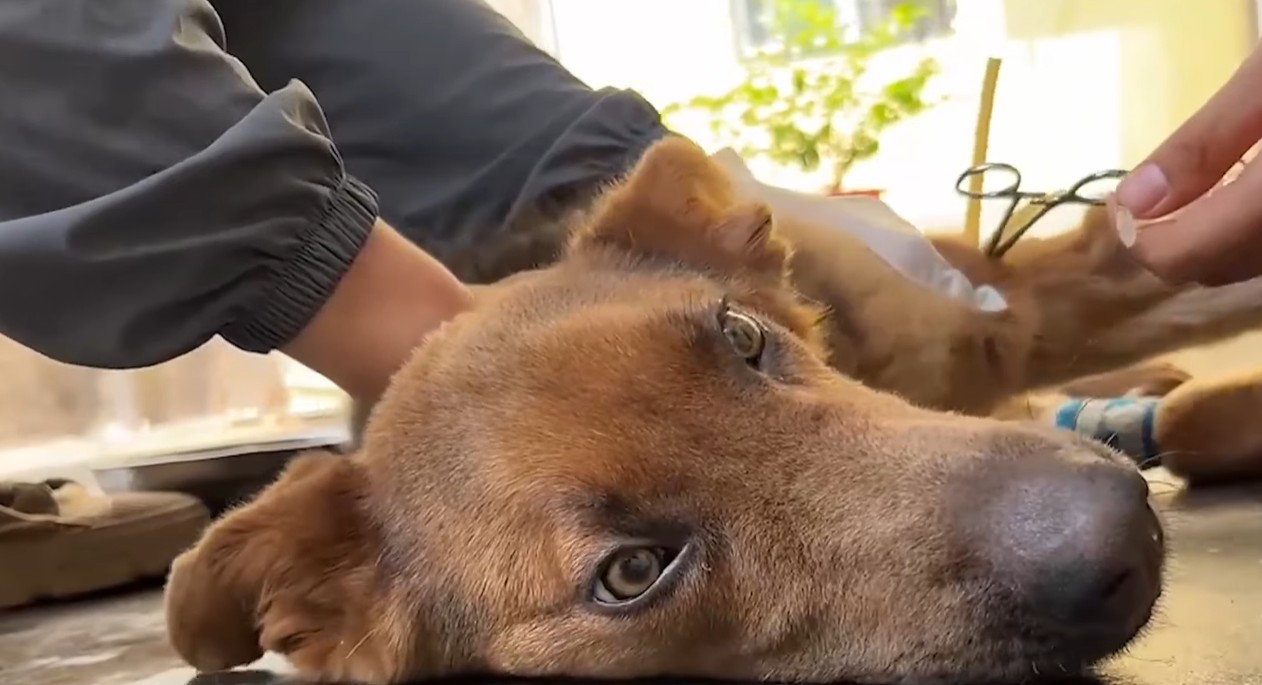
As treatment continued, the amount of fluid in Fuwa’s abdomen gradually decreased. Eventually, the veterinarian reported that only a small amount remained, and drainage no longer needed to be performed every day.
For the rescuers, this was an encouraging change from the day they had first seen his enormously swollen belly.
Still, improvement did not mean the medical challenges were over. Fuwa needed continued monitoring, albumin supplementation, and treatment for his liver problems. His rescuers had to balance hope with the reality that chronic ascites could take time to manage.
They also gave him a name: Fuwa, a name chosen with the hope that better days lay ahead.
During the 38 days he spent receiving hospital care, the rescuers traveled repeatedly between the clinic and their small shelter courtyard. Their work did not stop when they left the hospital. Other rescued dogs still needed food, veterinary visits, clean bedding, and daily attention.
The bills weighed heavily on them, but Fuwa’s gradual improvement strengthened their determination to continue.
By the time the veterinarian finally approved his discharge, Fuwa had become noticeably more trusting. When his rescuers approached, he would come closer and rub his head against their hands.
It was a small gesture, but after weeks of treatment and uncertainty, it carried special meaning.
A Quiet Room and a Different Kind of Beginning
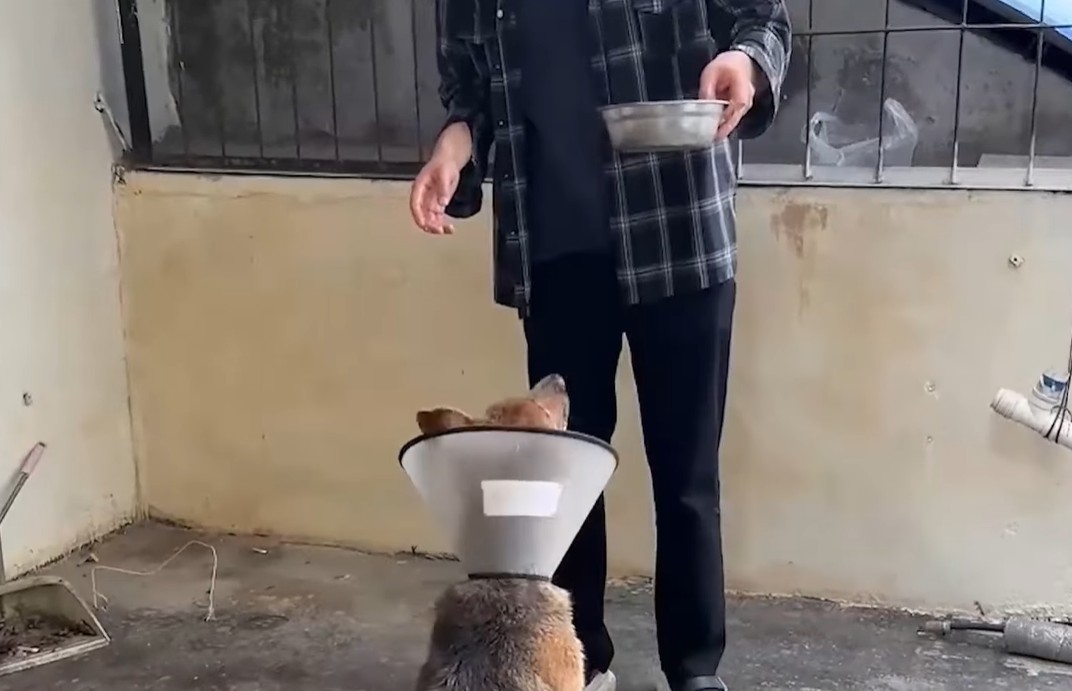
Before bringing Fuwa home, the rescuers prepared a separate room in a quiet corner of their courtyard. They cleaned and disinfected the space, hoping to make his transition from the hospital as gentle as possible.
At first, Fuwa explored cautiously, sniffing the unfamiliar surroundings and moving around the room with some hesitation. His rescuers spoke softly to him and gently stroked his head, giving him time to become comfortable.
They continued preparing nutritious meals, monitoring his condition, and following the veterinarian’s recommendations for his ongoing recovery. They also planned gentle outdoor walks as his health allowed.
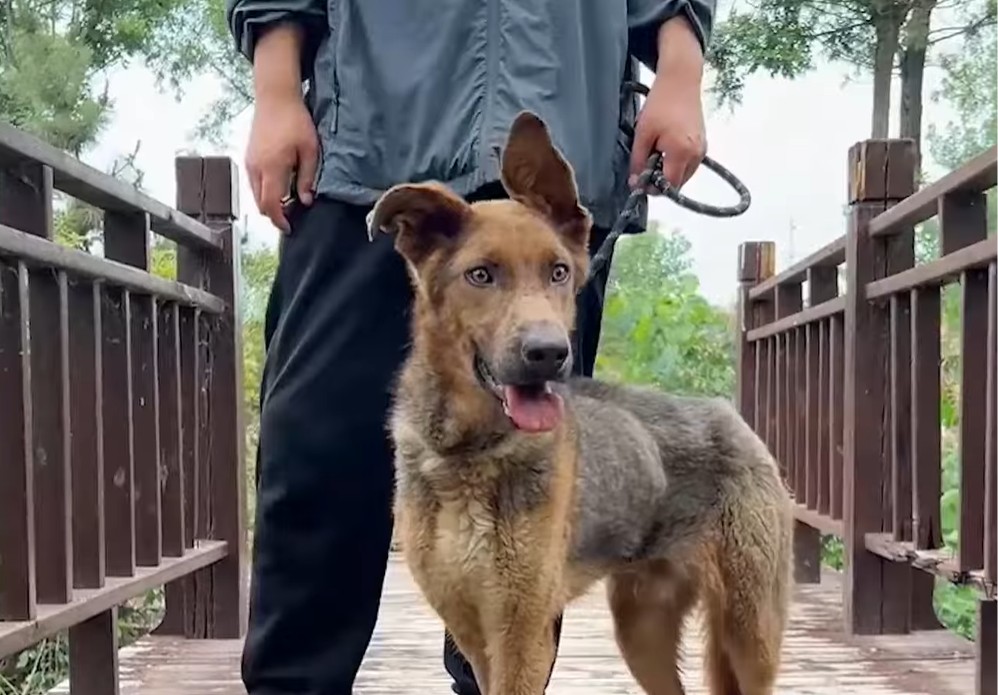
Seven days after his discharge, Fuwa was reportedly doing well. His future still depended on continued care, but he was no longer confined alone in the derelict building where his illness had once left him.
Now he had a clean place to rest, people watching over his health, and a courtyard filled with other rescued animals.
His rescuers still faced financial uncertainty and the daily demands of caring for so many dogs. They could not make every difficulty disappear, and Fuwa’s recovery was not something they could take for granted.
But his story had changed in a meaningful way. The dog who once followed strangers away from his former home now approached familiar hands with trust.
And in that small courtyard, Fuwa finally had the time and care he needed to keep getting better.