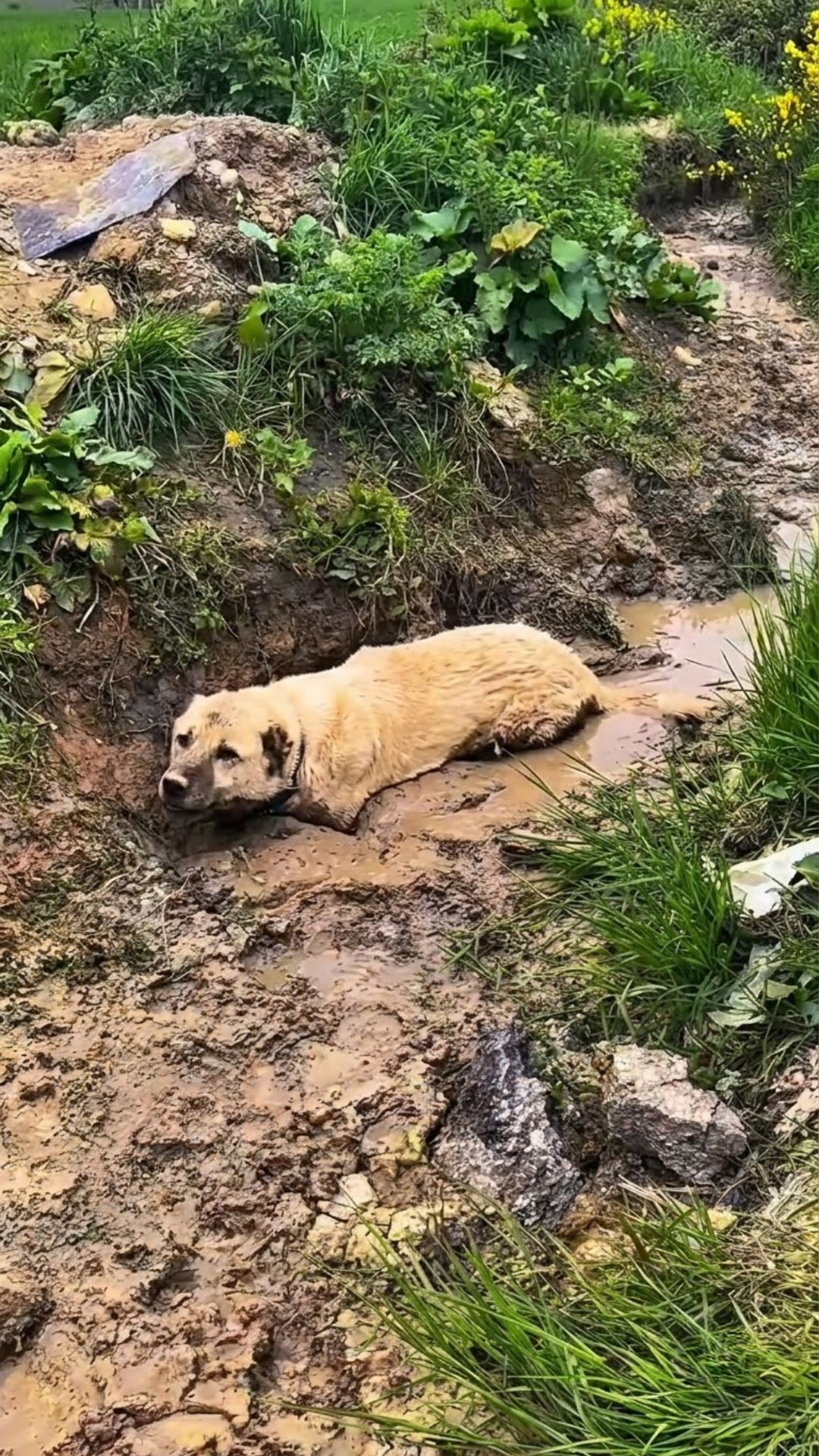
In the middle of an open field, a man came across a frightening sight: a dog trapped deep in the mud, with all four legs buried beneath the surface. Only the upper part of his body, along with his neck and head, remained above ground. Unable to pull himself free, the dog barked and cried loudly, struggling against the mud that held him in place.
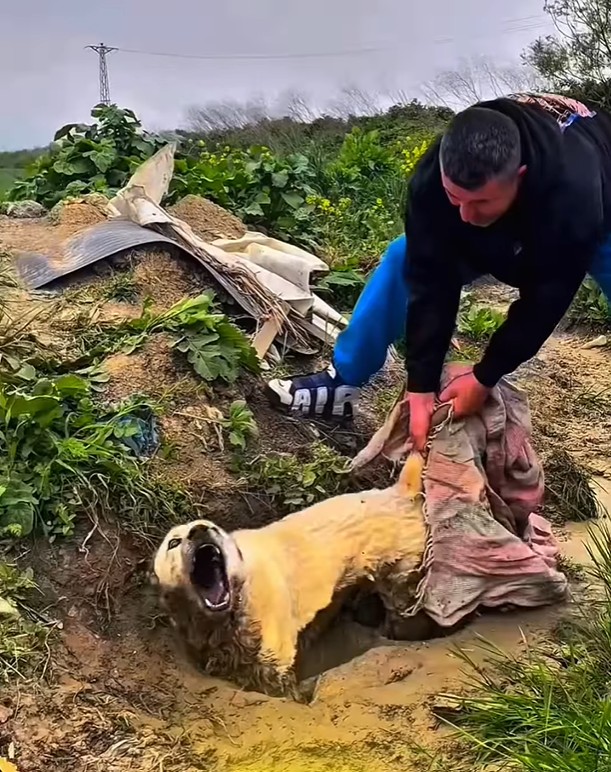
The man quickly realized that the dog needed help. The soft ground made it difficult to approach safely, and simply grabbing the animal would not be enough to free him. Finding a way to lift the dog without putting too much strain on his body, he brought over a piece of cloth and carefully worked it underneath the dog’s belly.
With the dog still trapped and the ground offering little support, the man began a difficult attempt to pull him out. He positioned himself on two raised patches of earth and used the cloth to lift the dog’s body upward. The animal was frightened, the mud resisted every movement, and the man had to keep trying until the dog could finally reach solid ground.
VIDEO: A Man Risks His Balance to Pull a Dog Out of Deep Mud
A Difficult Rescue on Unstable Ground
Freeing the dog was not as simple as pulling him by the body. His four legs were buried deep in the mud, while the surrounding ground made it difficult for the man to find a stable position from which to work.
He used a piece of cloth as a support, carefully sliding it beneath the dog’s belly. This gave him a way to lift the animal’s body rather than relying on a grip around his limbs.
The man then positioned himself on two raised patches of earth, trying to maintain his balance while pulling upward. The angle made the task particularly awkward. He had to use the limited firm ground available to him while working against the mud holding the dog down.
All the while, the dog continued barking and crying. He could not understand what was happening or why someone was pulling at his body. Even though the man was trying to help, the strange handling and his inability to move freely made the situation frightening.
The man persisted, adjusting his efforts as he worked to bring the dog closer to the surface. Finally, the dog’s body came free, and he was pulled onto solid ground.
The immediate danger had passed, but the encounter was not yet over.
“Sometimes, helping an animal means first getting through the moment when fear makes even a helping hand difficult to accept.”
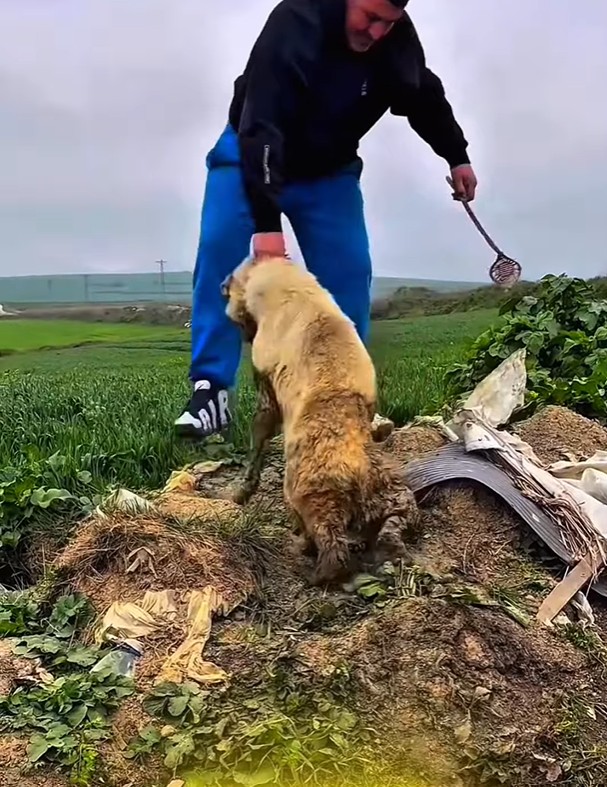
Safe on Land, but Still Too Frightened to Settle
Once the dog was out of the mud, he did not immediately become calm. He continued barking loudly and seemed unable to settle after the struggle. His reaction was understandable: the experience had involved being trapped, struggling to escape, and then being lifted by someone he did not know.
The man did not simply walk away after freeing him. Instead, he stayed close and tried to reassure the dog, giving him a chance to settle before attempting anything else.
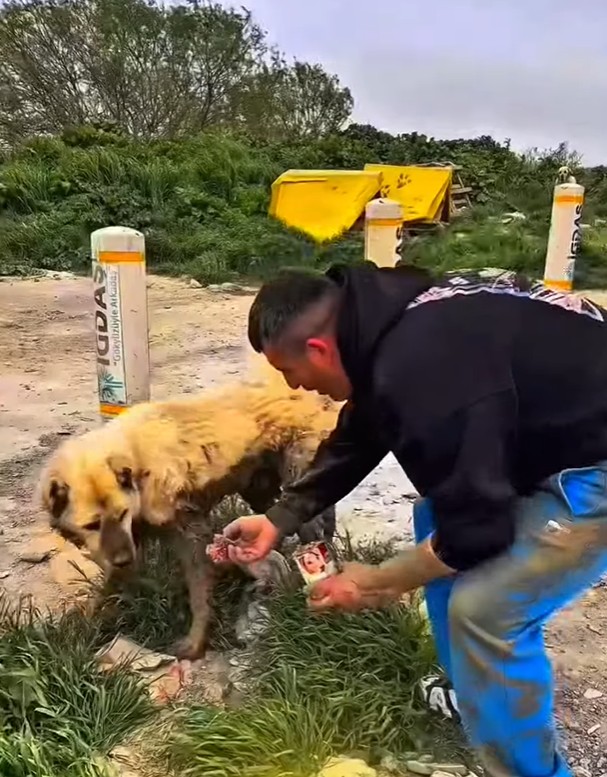
He then carried the dog to another area where the ground was flatter and more suitable for resting. Away from the muddy patch, the dog could be placed somewhere more stable while the man offered him water and a little food.
These were simple gestures, but they changed the nature of the encounter. The urgent struggle to get free had ended, and the dog now had an opportunity to drink, eat, and recover from the immediate stress of the experience.
At first, he had been barking and crying while trapped in the mud. Now, with the man remaining beside him, he gradually began to calm down.
The Small Gesture That Followed the Rescue
Once the dog had settled, he began eating and drinking. The man had helped him out of a difficult situation without knowing how he would react afterward, and the dog’s behavior began to change as the tension of the rescue passed.
Then the dog gently licked the man’s hand and face.
It was a small, unforced moment after an encounter that had begun with frantic barking and desperate struggles. The dog had not been calm when he was first pulled from the mud, but he eventually accepted the man’s presence long enough to eat, drink, and make that gentle contact.
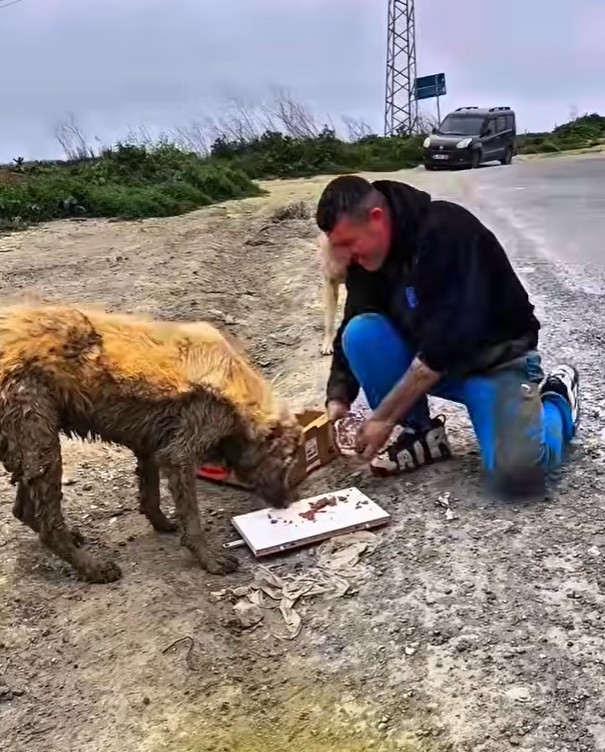
There is no need to assume exactly what the dog understood or felt. What can be seen is that his reaction changed as the immediate danger passed, and he became comfortable enough to approach the person who had helped him.
“Not every rescue ends with an animal staying beside the person who helped. Sometimes, the meaningful part is simply that fear gives way to a moment of trust.”
After eating and drinking, the dog eventually left the area. The man had freed him from the mud, helped him settle on firmer ground, and offered food and water before allowing him to move on.
His departure did not make the rescue any less worthwhile. The encounter was brief, and there is no further information about where the dog went afterward, but the immediate outcome was clear: he was no longer stuck in the field, unable to free himself.
What began with a man’s discovery of a frightened dog trapped in deep mud ended with the animal standing on solid ground, accepting food and water, and offering a gentle lick before walking away. Sometimes, a rescue is not about keeping an animal or changing the course of his entire life. It is about seeing that he needs help, choosing not to ignore him, and staying until he can move forward on his own.