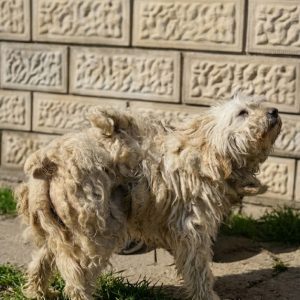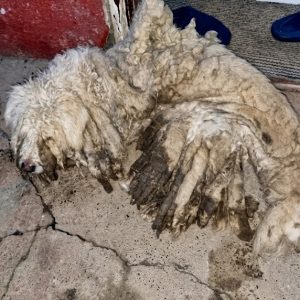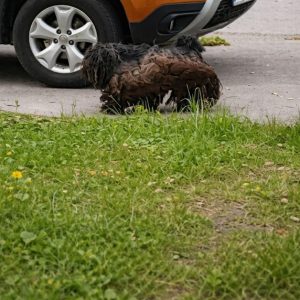
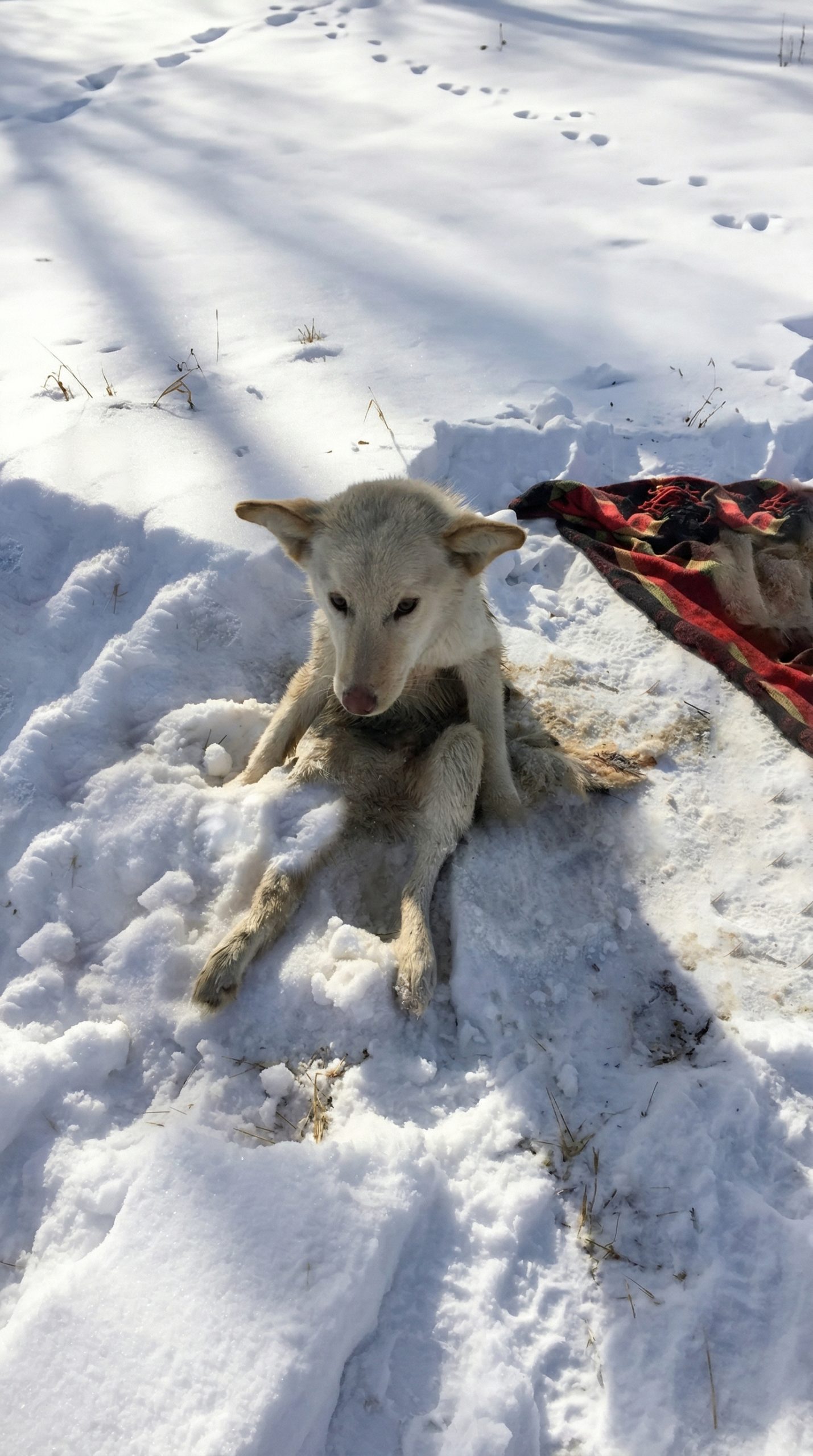
When we found Lunka half-buried in a drift of freezing snow, his tiny, one-year-old body had completely stopped responding to his desperate commands to stand. The brutal winter wind ripped across the open field, further chilling a fragile frame that had already surrendered to a senseless act of human cruelty.
He lay perfectly still on the icy ground, offering only the faintest, trembling exhale as the falling snow began to quietly cover his battered, bruised coat.
Deep, neglected wounds dotted his skin, silently attracting the harsh elements of nature that were slowly trying to reclaim his failing body while he wept in the freezing silence.
VIDEO: A Paralyzed Puppy’s 150-Day Journey From the Freezing Snow to Freedom
Trading the Biting Cold for the Gentle Warmth of an Old Winter Coat
The frozen ground offered no sympathy, and time was rapidly running out for the motionless yearling. We fell to our knees in the wet slush, terrified that lifting his heavy, unresponsive body might extinguish the final spark of life still flickering in his chest.
Securing a paralyzed animal requires a sequence of quiet, deliberate movements:
- Sliding open palms firmly beneath his fragile spine to prevent any further shifting.
- Wrapping his freezing, stiffened limbs tightly in the folds of a thick, worn jacket.
- Holding his face incredibly close to our own to share the little body heat we had to offer.
We simply held him against our chests in the dark, silently begging him to endure the agonizing hours until daylight broke.
The drive to the veterinary clinic was swallowed by a heavy, anxious silence, broken only by the rhythmic hum of the heater working to thaw his icy fur.
Navigating the Long and Painful Corridors of Healing and Regret
The sterile, bright lights of the examination room illuminated the full, heartbreaking map of his trauma. Lunka’s lower half was entirely paralyzed, the devastating result of a vicious strike that had left him stranded in the snow to fade away alone.
Days bled into weeks, turning into a grueling, exhausting marathon of medical interventions and quiet moments of deep uncertainty.
The process of rebuilding a damaged spine is terribly slow and rarely linear. It involves endless rounds of gentle physical manipulation, carefully scheduled medications, and the heavy emotional burden of simply waiting for a miracle to occur.
Despite the profound ache resting deep within his bones, Lunka never once tried to bite the hands that manipulated his stiff, unyielding legs.
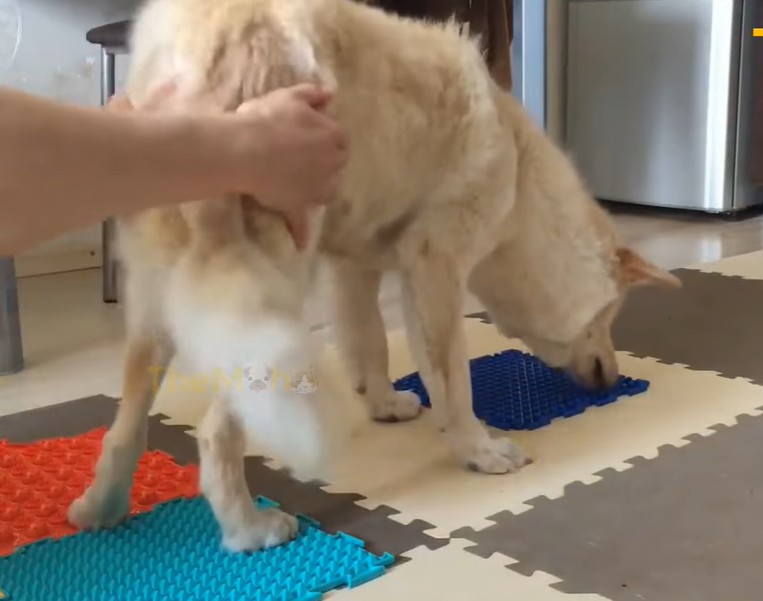
Discovering the Forgotten Strength Hidden Within Trembling Paws
As the harsh winter finally melted into a softer season outside the clinic windows, a subtle but undeniable shift happened within Lunka’s quiet enclosure.
One morning, a faint, deliberate twitch rippled down the length of his back paws.
It was the microscopic victory we had spent months praying for, signaling that the damaged nerves were finally fighting their way back to life. He worked tirelessly during his daily physical therapies, pulling his heavy weight forward and dragging his legs across the soft mats with a profound, stoic determination.
Every failed attempt to stand was met with an immediate, stubborn effort to try again.
Finding Absolute Freedom and Forgiveness One Hundred and Fifty Days Later
Exactly one hundred and fifty days after we pulled his freezing, lifeless form from the snowbank, Lunka pushed himself off the ground and stood entirely on his own four feet.
He didn’t just walk; he took off in a clumsy, beautiful run, his paws gripping the earth with the joy of a creature who had been given a second chance at existence.
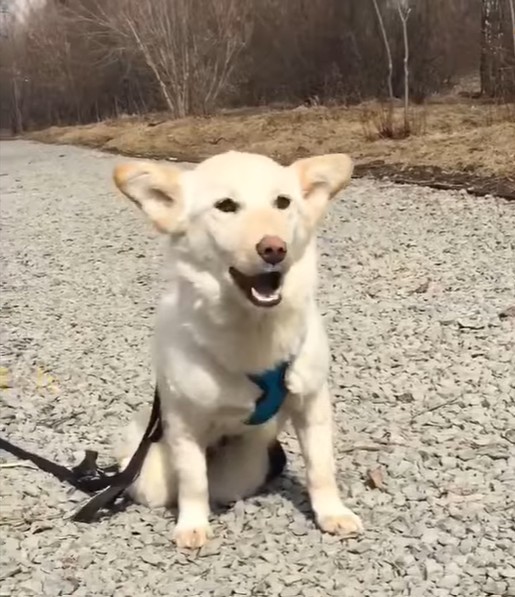
The bruised, weeping puppy who had once resigned himself to the ice was completely gone.
In his place stood a remarkable survivor, proving that even the most broken souls can rise above their darkest moments when surrounded by unwavering patience and a quiet, steadfast love.